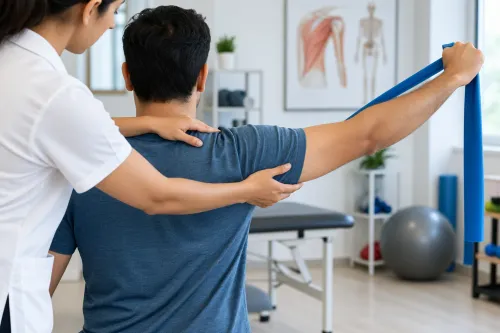
Many people begin physiotherapy because something hurts. Once pain decreases, however, a different question often appears.
How can the body become better prepared for the demands of training?
Sports performance training focuses on developing physical qualities that support athletic movement rather than simply addressing symptoms.
For active adults and athletes in Naupada, Maharashtra, this approach may be useful when the goal is to progress from basic fitness toward stronger, more efficient movement.
Rehabilitation and performance overlap but have different goals
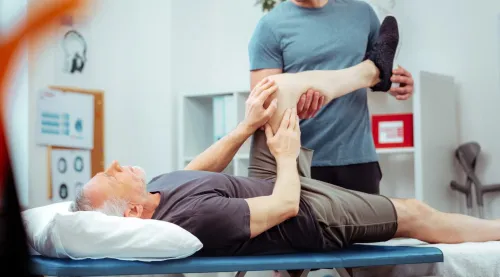
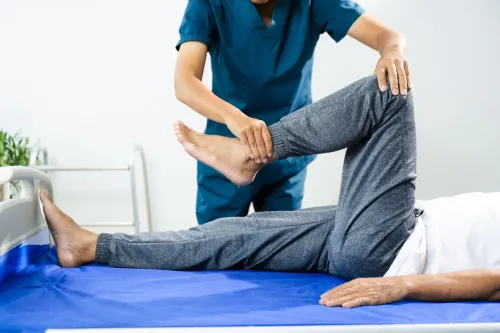
Injury rehabilitation usually begins with restoring abilities that have been lost.
Performance training builds on those foundations.
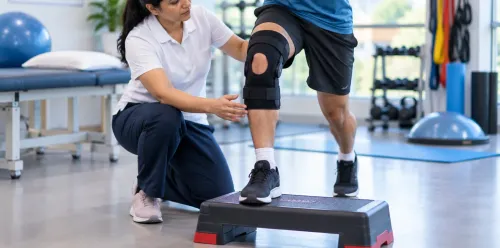
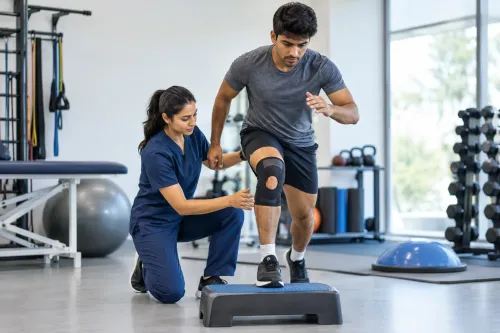
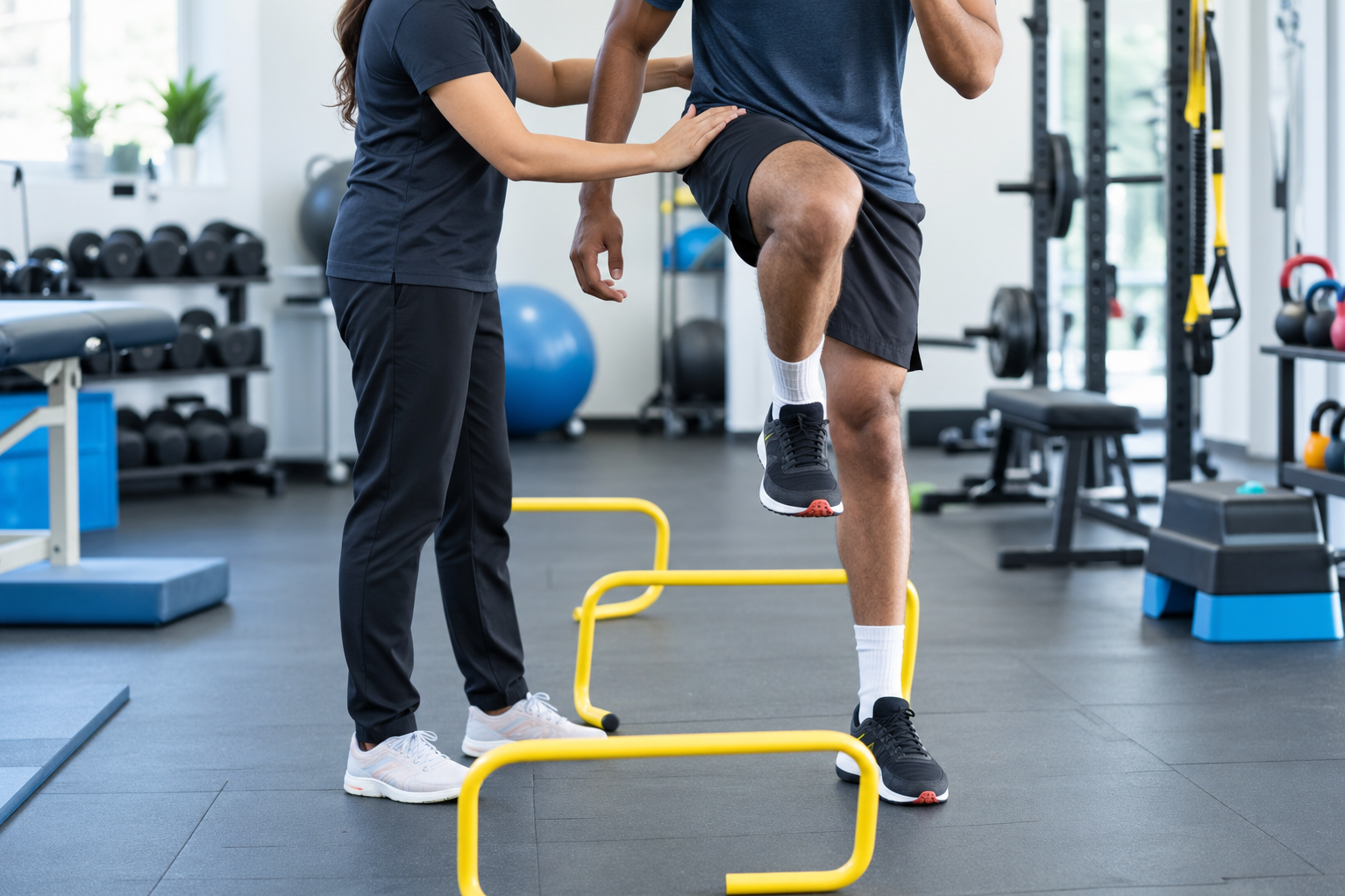
A person recovering from a knee injury may initially focus on regaining strength and balance. Later, the programme may advance toward acceleration, jumping, landing, speed, power, and repeated effort.
This transition matters because everyday exercises do not always prepare the body for sporting intensity.
Performance starts with identifying physical demands
Different sports require different combinations of strength, speed, endurance, mobility, and coordination.
A runner needs repetitive impact tolerance.
A badminton player repeatedly accelerates, brakes, lunges, and changes direction.
A football player needs speed, lower-limb power, dynamic control, and the ability to perform under fatigue.
Training should therefore reflect actual sporting requirements.
Assessment can reveal limiting factors
Before progressing training, it can be useful to evaluate the athlete's current physical abilities.
These may include:
- Lower-limb strength
- Single-leg control
- Mobility
- Balance
- Jumping ability
- Landing mechanics
- Core control
- Movement quality
- Exercise tolerance
Identifying a deficit does not automatically mean it caused a previous injury. However, it can help guide training priorities.
Strength forms an important foundation
Athletes sometimes focus heavily on agility drills while neglecting basic strength.
Strong muscles help produce force and control movement.
A structured programme may therefore include progressive resistance exercises before adding higher-speed tasks.
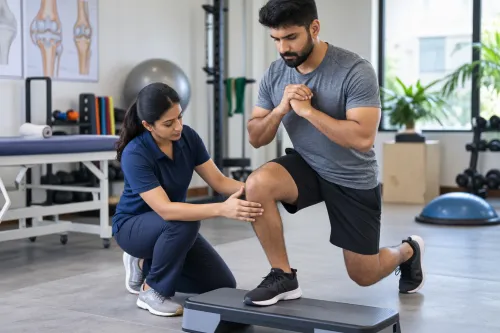
Lower-limb training might involve squats, lunges, hip-dominant movements, calf strengthening, and single-leg exercises.
Upper-body athletes may require shoulder, trunk, and pulling strength alongside sport-specific work.
Speed should be introduced progressively
Fast movement creates different demands from slow controlled exercise.
Athletes should therefore develop movement quality before repeatedly training at maximum intensity.
A useful progression can move from planned drills toward faster, more reactive activity.
Jump training may similarly progress from basic bilateral landing to single-leg tasks and more sport-specific patterns.
At N V Physiotherapy clinic, performance programmes can be adapted to training history, current capacity, previous injuries, and sporting goals.
Fatigue changes how athletes move
Movement that looks controlled during the first few repetitions may deteriorate after repeated effort.
This is particularly relevant because sport rarely occurs in a completely rested state.
As training advances, some exercises may therefore include fatigue-related challenges while maintaining appropriate technique.
This can help prepare athletes for later stages of matches, longer training sessions, and repeated high-intensity efforts.
Performance development should remain measurable
A programme is more useful when progress can be observed.
Measurements may include increased strength, improved movement quality, better jumping control, greater running tolerance, or improved confidence during sport-specific tasks.
The goal is not to fill sessions with complicated exercises.
Useful performance training should progressively prepare the athlete for the forces, speeds, positions, and repeated movements their sport actually demands.
For people returning after injury, this also provides an important bridge between being medically recovered and being physically prepared to perform again.
Keywords