Pregnancy can change your posture, breathing, abdominal-wall tension, balance and pelvic-floor workload long before pain or leakage appears. You will learn which symptoms need assessment, how physiotherapy evaluates and treats them, how to exercise safely, and how to progress recovery after vaginal or caesarean birth.
Key takeaways
- Pregnancy can increase pelvic floor loading and change posture, joint stability and movement.
- Ask a physiotherapist about persistent pelvic pain, leaking, heaviness or painful movement.
- Use pelvic floor exercises alongside breathing, strength work and symptom-based activity adjustments.
- Return to running, sex, work and sport gradually after healing and functional assessment.
How pregnancy changes your body from the first trimester to the third
- First trimester: Visible posture change may be small, but hormonal changes begin altering joint stability. Fatigue, nausea and early low-back or pelvic aching can affect how you move. Abdominal wall pregnancy changes start as the uterus grows, while pelvic floor loading increases gradually.
- Second trimester: The enlarging uterus shifts your centre of mass forward, encouraging increased lower-back curve, wider stance and altered walking. Abdominal-wall tension rises as tissues stretch, and pelvic floor loading increases with standing, lifting, coughing and the baby’s weight.
Changing rib position and diaphragm excursion alter pregnancy breathing mechanics, which can reduce comfortable exercise tolerance.
- Third trimester: Forward posture, reduced trunk leverage and a changing base of support make balance less reliable. Ligament laxity can increase movement at the pelvis and other joints, while pressure on the bladder, bowel and pelvic floor can cause heaviness or occasional leakage.
Mild, position-related back ache, stretching sensations, breathlessness that settles with rest, and temporary pelvic pressure can occur as the body adapts. Seek assessment for severe or persistent pain, difficulty walking, one-sided leg symptoms, loss of strength or sensation, regular painful contractions, vaginal bleeding or fluid leakage.
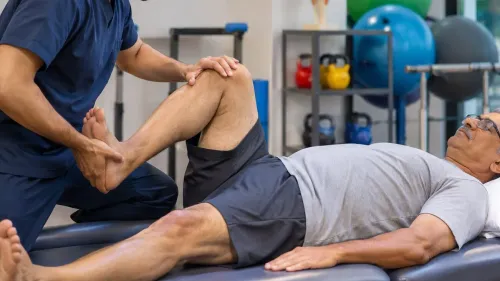
A physiotherapist can assess movement, breathing, abdominal and pelvic-floor coordination rather than judging recovery by abdominal appearance alone.
Which pregnancy symptoms should a physiotherapist assess?
Book a physiotherapy assessment when pain changes how you walk, sleep, work, exercise, use the toilet or care for yourself. Prompt obstetric advice comes first for vaginal bleeding, fluid loss, regular contractions, fever, severe headache, visual changes, chest pain, breathlessness or reduced fetal movement.
| Symptom | Assessment is useful when | Checks may include |
|---|---|---|
| Pelvic girdle pain or pubic symphysis pain | Turning in bed, stairs, standing on one leg or getting out of a car hurts | Gait, pelvic loading, hip movement and bed-transfer technique |
| Low-back pain or pregnancy sciatica | Pain travels into the buttock or leg, causes numbness or limits walking | Spine and nerve screening, strength, sensation and movement tolerance |
| Rib or thoracic pain | Breathing, coughing, sitting or reaching becomes painful | Rib movement, posture, breathing pattern and thoracic mobility |
| Carpal tunnel pregnancy physiotherapy | Night-time tingling, numbness, hand weakness or dropping objects persists | Neck, wrist and nerve tests, grip and work-task modification |
| Constipation, pelvic pressure or urinary leakage | Straining, heaviness, urgency, leakage or incomplete emptying affects daily life | Bowel habits, bladder symptoms, pressure triggers and pelvic-floor coordination |
Your history covers onset, pregnancy stage, previous injuries, birth plans, activity and warning symptoms. A clinician may assess abdominal-wall control and, with informed consent, pelvic-floor contraction, relaxation, tenderness, scar or prolapse signs; an internal examination is optional.
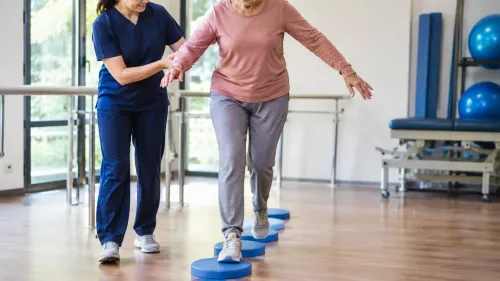
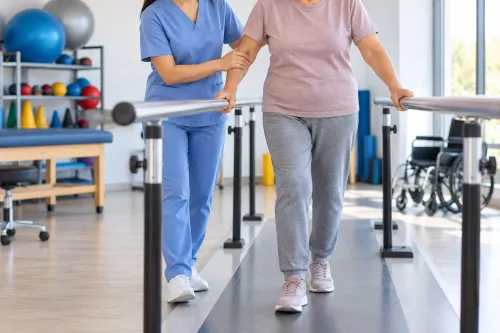
- Movement and functional checks: walking, stairs, sit-to-stand, single-leg loading and turning in bed.
- Coordination: breathing, abdominal pressure and pelvic-floor timing.
- Referral: N V Physiotherapy clinic - 9076000356 can coordinate findings with your obstetric team when symptoms need medical review.
Related service
Trauma (fracture) Rehabilitation Therapy Trauma (fracture) Rehabilitation Therapy ₹800 At N V Physiotherapy Clinic in Thane, Dr. Nikita Vaidya Kulkarni (PT) provides expert trauma (fracture) rehabilitation therapy to support safe and... View service → |
How to exercise safely and train the pelvic floor during pregnancy
For pregnancy exercise safety, aim for moderate effort: you should be able to speak in full sentences, not gasp between words. The ACOG benchmark is 150 minutes of moderate aerobic activity each week when no medical or obstetric contraindication exists. Use the talk test pregnancy rule, drink regularly, avoid overheating, and change position slowly.
1. In the first trimester, continue familiar activities at a manageable intensity and add rest for nausea or fatigue. In the second trimester, widen your stance, reduce impact, and modify balance work as your centre of gravity changes.
In the third trimester, choose walking, swimming, stationary cycling, or supported strength exercises; avoid movements that cause pain, pressure, leaking, or breath-holding.
2. Change positions rather than staying flat on your back for prolonged periods after the first trimester, especially if you feel faint, breathless, or nauseated. Side-lying, seated, standing, and hands-and-knees options can reduce symptoms.
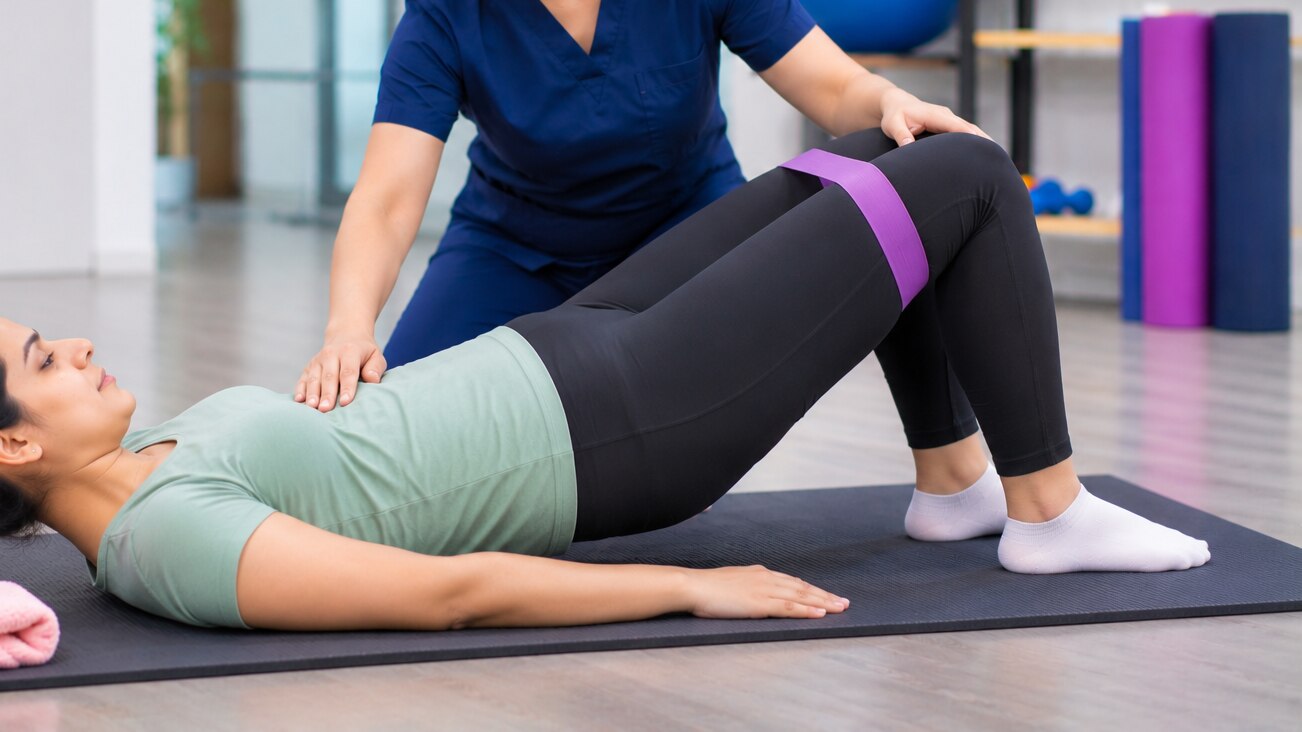
3. Train the pelvic floor in several ways: coordinate a gentle contraction with exhalation, hold it for endurance, practise quick contractions for coughing or lifting, and fully release between repetitions.
Pelvic floor relaxation matters because an overactive pelvic floor can contribute to pelvic pain, painful sex, constipation, or difficulty emptying the bladder; repeated maximal Kegels can worsen these symptoms.
Stop exercising and contact your clinician for vaginal bleeding, fluid leakage, regular painful contractions, dizziness, chest pain, calf pain or swelling, or excessive shortness of breath. Also report severe pain or reduced fetal movement according to your maternity team’s instructions.
What recovery involves after vaginal or caesarean birth
The first 24 hours focus on safe movement, pain control and basic function, not fitness. After either birth, change position, sit out of bed and take short walks as tolerated; after a caesarean, support the incision when coughing and avoid lifting more than your baby until your maternity team advises otherwise.
The postpartum recovery timeline depends on bleeding, pain, sleep, feeding, wound healing and complications.
Vaginal birth can involve perineal tear recovery, episiotomy, assisted delivery or pelvic-floor trauma. Soreness, swelling, haemorrhoids and heaviness can make sitting, walking and toileting difficult, so increase pelvic-floor loading gradually rather than repeatedly squeezing through pain. A caesarean does not prevent pelvic-floor symptoms: pregnancy and pushing can still contribute to leakage or prolapse.
Caesarean scar care includes keeping the wound clean and dry, watching for redness or discharge, and later addressing sensitivity, tightness or reduced skin movement with guidance.
- Early: practise relaxed breathing, ankle movements, supported walking and comfortable toileting.
- Progression: add gentle abdominal activation, pelvic-floor contraction and full relaxation, then longer walks and functional lifting.
- Later: increase strength, impact and sport only when wound pain, leakage, heaviness and abdominal symptoms remain settled.
Diastasis recti postpartum is assessed through function, breathing, load tolerance and symptoms, not a gap-width number alone. For bowel care, drink regularly, eat fibre, place your feet on a stool, lean forward, breathe out without straining, and ask your clinician about a medically appropriate stool softener.
Seek medical review for fever, wound breakdown, foul discharge, heavy bleeding, urinary retention, new bowel or bladder loss, sudden leg swelling or chest symptoms.
When can you return to running, sex, work and sport?
Six or twelve weeks is not a universal clearance date for work, sex, running or sport. Your postpartum return to running should follow symptoms and functional capacity: increase activity when walking, lifting and daily tasks remain comfortable, not because a calendar says you are ready.
Useful return-to-impact checks include:
- Walking briskly without pelvic, back, perineal or wound pain
- Standing on one leg without pelvic dropping or instability
- Performing repeated single-leg loading and hopping without leakage, heaviness or pain
- Demonstrating adequate leg, trunk and pelvic-floor strength
- Coordinating breathing, landing and pressure control
- Completing work or sport drills without symptoms later that day or the next morning
Caesarean and perineal wounds need healing and medical review before impact. Delay sex if penetration causes pain, bleeding, wound discomfort or guarding; postpartum painful sex can result from scar sensitivity, dryness, pelvic-floor overactivity or weakness, and physiotherapy can address these causes.
Assessment can also guide treatment for pelvic organ prolapse symptoms, persistent pelvic or back pain, bowel or bladder difficulty, leakage, and postpartum abdominal doming through movement retraining, graded strengthening, relaxation, scar care and pelvic-floor coordination.
Postpartum red flags require medical review, not rehabilitation: heavy bleeding, fever, foul-smelling discharge, wound breakdown, inability to pass urine, new bowel or bladder loss, sudden leg swelling, chest pain or shortness of breath.
Frequently asked questions
How does pregnancy change your body across the three trimesters?
Pregnancy affects joint stability, posture, abdominal wall loading, pelvic floor demand, fatigue and movement patterns from the first trimester onward.
Which pregnancy symptoms should a physiotherapist assess?
Seek assessment for persistent low-back or pelvic pain, urinary or bowel leakage, pelvic heaviness, painful movement or difficulty staying active.
How can you exercise safely and train your pelvic floor during pregnancy?
Use comfortable, controlled exercise and coordinate pelvic floor contractions with breathing; reduce or modify activity when symptoms worsen.
What does recovery involve after vaginal or caesarean birth?
Recovery includes wound or perineal healing, gradual walking and strength rebuilding, pelvic floor rehabilitation, symptom monitoring and support for daily tasks.
When can you return to running, sex, work and sport after birth?
Return when healing is progressing, symptoms are controlled and strength and function tolerate a gradual increase in demand.