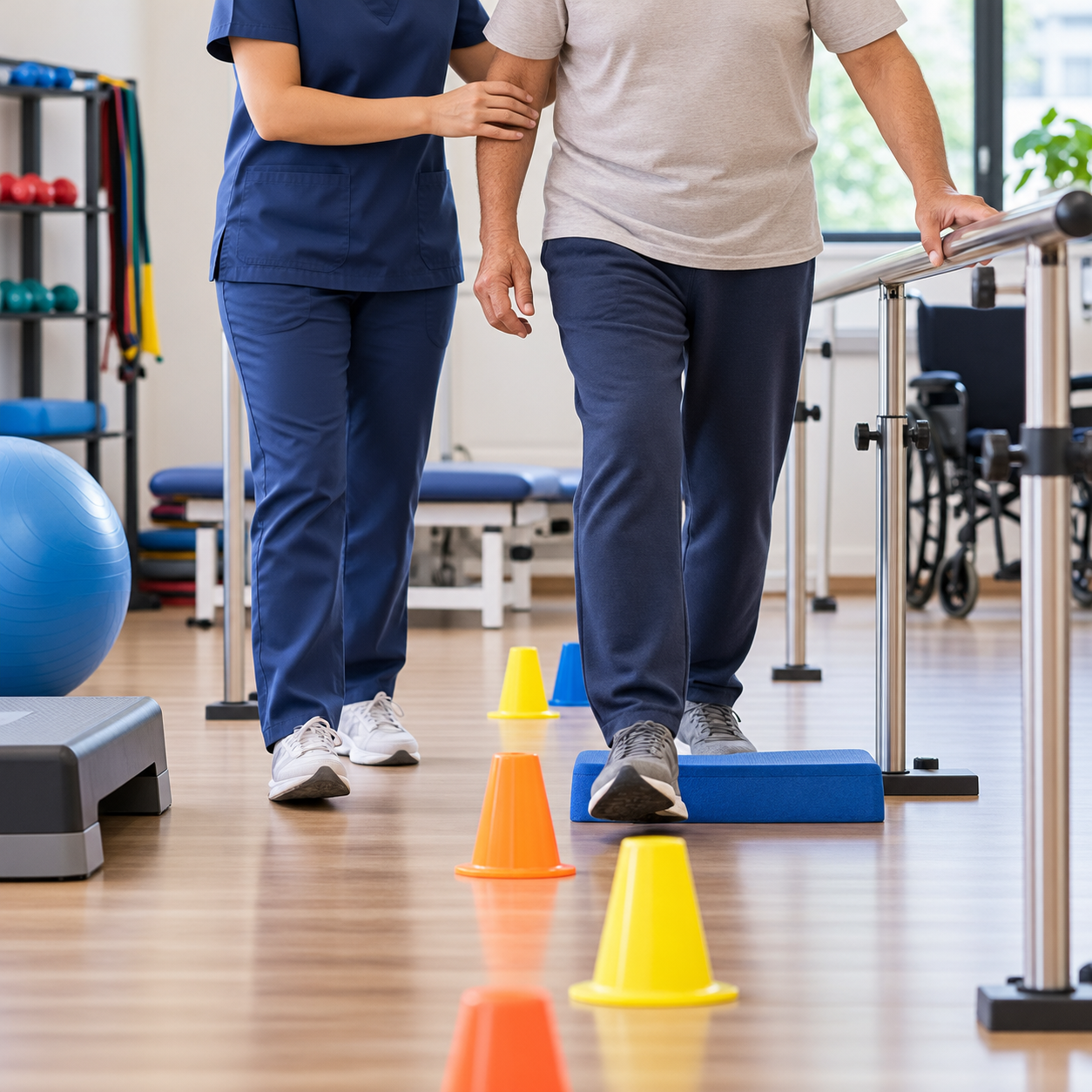
A fall can have consequences that extend far beyond the immediate injury. Even when no fracture occurs, an older person may become afraid of walking independently and begin avoiding activity.
This reduction in movement can gradually lead to weaker muscles, poorer balance, and even greater concern about falling.
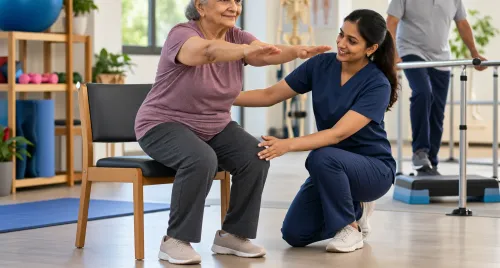
A structured Fall prevention for seniors programme aims to address the physical and functional factors that can increase instability.
For families in Thane West, Maharashtra, recognising the right time to seek physiotherapy can help older adults maintain mobility and confidence before repeated falls become an established pattern.
One fall can be an important warning sign
People sometimes dismiss a fall as bad luck, especially when no significant injury occurs.
However, the circumstances surrounding the fall can provide useful information.
Was the person unable to recover after losing balance?
Did the foot catch during walking?
Was turning difficult?
Has walking speed recently decreased?
Does the individual regularly hold furniture for support?
These details may reveal changes in strength, balance, coordination, mobility, or confidence.
Who may benefit from assessment
Physiotherapy assessment may be useful when an older adult:
- Has fallen previously
- Frequently stumbles
- Feels unstable while turning
- Avoids stairs
- Walks very slowly
- Requires furniture for support
- Has difficulty getting up from chairs
- Has become less active because of fear
- Struggles on uneven surfaces
A decline in activity itself can be an important sign, even when actual falls are uncommon.
What good fall prevention should include
Fall prevention needs more than general advice to “be careful.”
Physical capacity can often be trained.
A physiotherapist may assess strength, balance, gait, mobility, stepping responses, and functional movement.
Treatment can then target the specific limitations identified.
For example, someone with lower-limb weakness may need progressive strengthening, while a person who becomes unstable during turns may require more dynamic balance practice.
Balance exercises should become progressively challenging
Standing with support can be a useful starting point, but exercises eventually need to challenge balance enough to create adaptation.
Depending on ability, progression may include:
- Reducing hand support
- Changing foot position
- Practising weight shifts
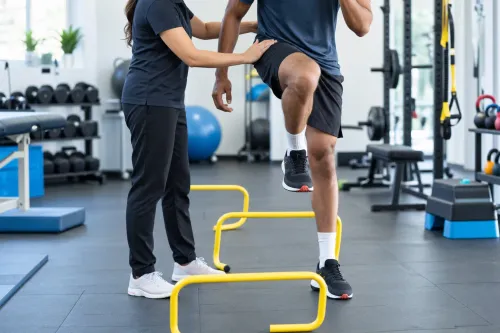
- Taking controlled steps
- Changing direction
- Walking around obstacles
- Performing functional mobility tasks
Safety remains important throughout this progression.
The objective is not to expose patients to unnecessary risk but to improve their ability to respond to everyday balance challenges.
Strength should not be overlooked
A person may understand how to maintain balance yet lack the muscle strength needed to recover from a small loss of stability.
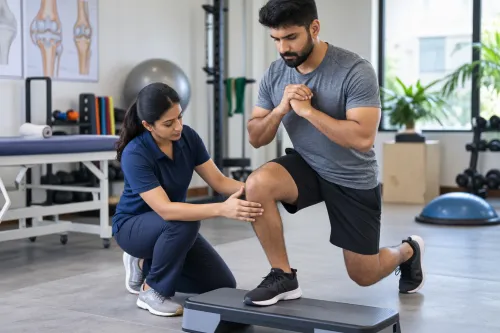
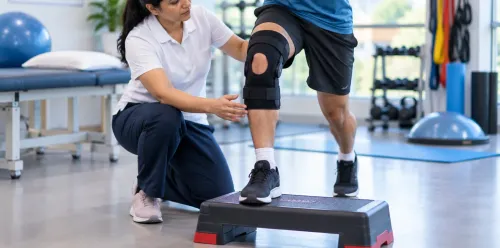
Lower-limb strengthening can therefore form an important part of fall-prevention rehabilitation.
Exercises may focus on the hips, thighs, calves, and functional movements such as rising from a chair.
N V Physiotherapy clinic can assess mobility and develop an exercise programme according to the patient's current physical abilities and daily requirements.
Home habits also influence fall risk
Rehabilitation becomes more effective when the person's daily environment supports safer movement.
Useful considerations may include:
- Adequate lighting
- Clear walking pathways
- Stable footwear
- Suitable hand support where required
- Care around loose rugs
- Safe bathroom access
Walking aids should also be correctly fitted when they are needed.
An incorrectly adjusted stick or walker may make movement less efficient instead of improving confidence.
The goal is confident independence
Fall prevention should not make older adults afraid to move.
Restricting activity excessively can contribute to further weakness and loss of independence.
A better approach is to develop enough strength, balance, coordination, and confidence for safer participation in daily life.
Progress may appear in practical ways.
The person may begin walking farther, standing from a chair with less assistance, turning more comfortably, managing stairs more confidently, or returning to activities previously avoided.
Seeking physiotherapy before repeated falls occur can therefore be valuable.
Fall-prevention rehabilitation focuses not only on avoiding accidents but also on preserving the mobility and independence that allow older adults to remain engaged in everyday life.
Keywords