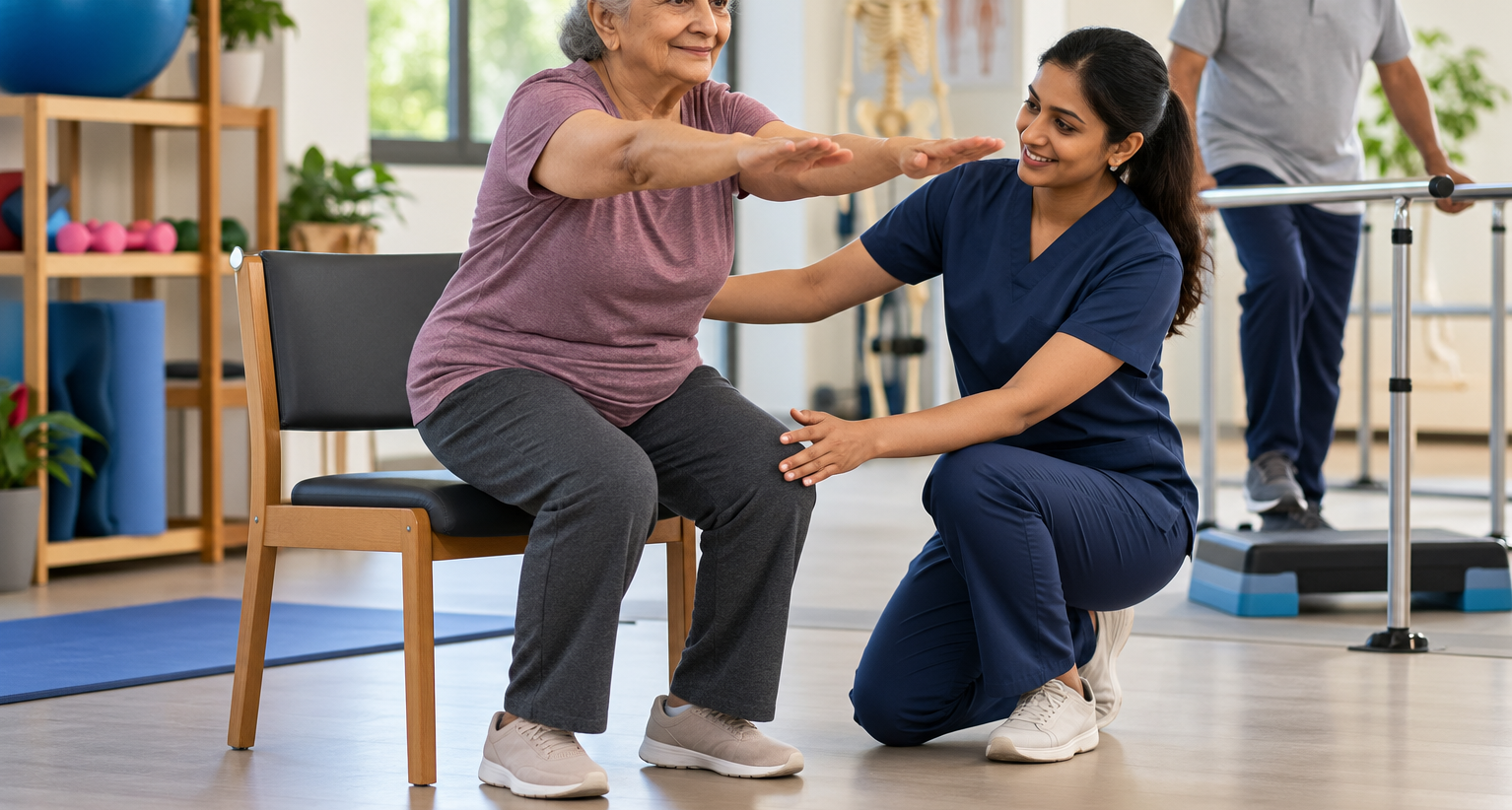
Older adults often need physiotherapy for reasons that extend beyond a single painful joint. Strength, balance, posture, mobility, confidence, bone health, and independence can all influence how safely someone manages everyday life.
For families exploring Geriatric & Osteoporosis physiotherapy, choosing the right rehabilitation approach means looking at functional needs rather than focusing only on age.
Patients near Panchpakhadi, Maharashtra, may benefit from physiotherapy when reduced mobility begins affecting walking, transfers, stairs, household activities, and participation outside the home.
Why assessment should come before exercise
A generic senior exercise routine may not suit every older adult.
One person may have good strength but poor balance. Another may walk steadily but struggle to rise from a chair because of lower-limb weakness.
Someone with osteoporosis may require additional attention to posture, safe loading, fracture history, and movement technique.
A useful assessment may therefore review:
- Walking ability
- Balance
- Lower-limb strength
- Joint mobility
- Posture
- Transfer ability
- Previous falls
- Activity level
- Confidence during movement
The findings help determine which areas deserve priority.
Osteoporosis changes exercise planning
Osteoporosis involves reduced bone strength and a greater risk of fracture.
This does not mean that people should avoid physical activity.
Appropriately selected weight-bearing activity, resistance exercise, balance training, and postural work may form part of a broader management approach according to individual health status.
Exercise selection should be thoughtful, particularly for people with previous fractures, significant spinal changes, or other medical limitations.
Functional exercises are especially valuable
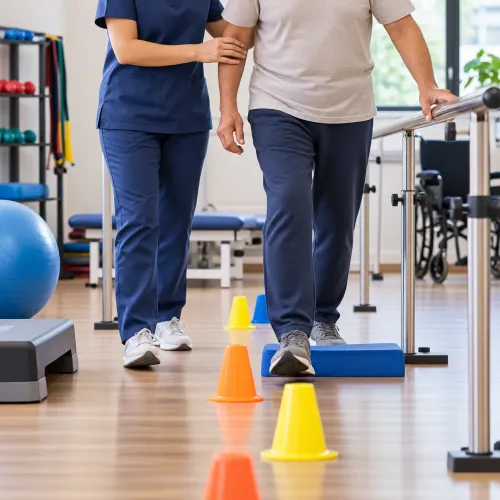
Older adults usually benefit most when exercises connect with real daily tasks.
Examples can include:
- Sit-to-stand practice
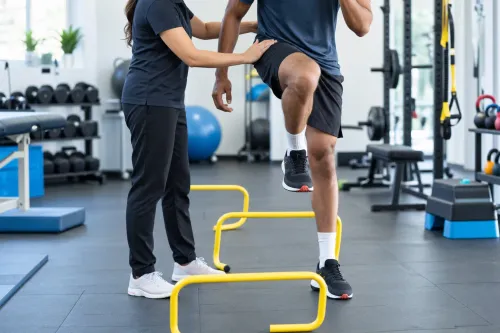
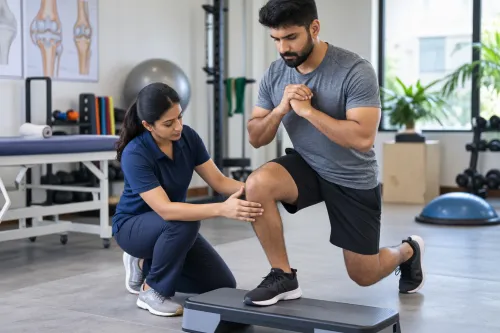
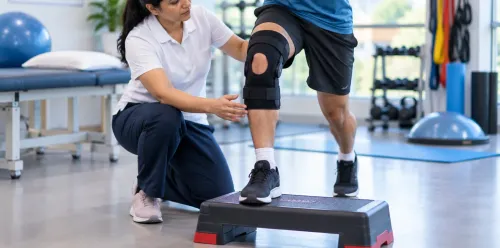
- Step training
- Walking drills
- Calf strengthening
- Hip strengthening
- Balance exercises
- Posture work
- Controlled reaching
These activities develop abilities required during normal life rather than training isolated muscles without functional context.
How families can judge a rehabilitation programme
A suitable geriatric physiotherapy programme should feel progressive without being unnecessarily intimidating.
Families can look for several positive indicators.
The therapist should assess current abilities before setting exercises, adapt tasks to the patient's confidence, explain safety considerations, and gradually increase difficulty as capacity improves.
The patient should also understand the purpose behind key exercises.
At N V Physiotherapy clinic, rehabilitation can be individualized according to mobility, physical capacity, bone-health considerations, and the person's everyday goals.
Independence can be a meaningful treatment goal
Not every patient wants to return to sport.
For an older adult, meaningful goals may include walking independently within the neighbourhood, using stairs safely, standing long enough to prepare food, getting out of a chair comfortably, or participating in family activities.
These goals can guide treatment progression.
Improving strength may make chair transfers easier. Better balance may increase confidence during walking. Increased endurance may allow longer outings without excessive fatigue.
Progress should be reviewed over time
Age alone should not determine exercise intensity.
Older adults can improve strength and functional capacity when training is appropriately prescribed and progressed.
Regular review helps determine whether exercises remain challenging enough.
If a patient has become comfortable with a routine performed for several weeks, the programme may need progression rather than endless repetition.
Geriatric physiotherapy works best when it supports the abilities that matter most to everyday independence.
For people with osteoporosis, the same principle applies with additional attention to safe loading and bone-health considerations.
A thoughtful programme should help the individual move with greater strength, control, confidence, and practical independence instead of treating ageing itself as the problem.
Keywords