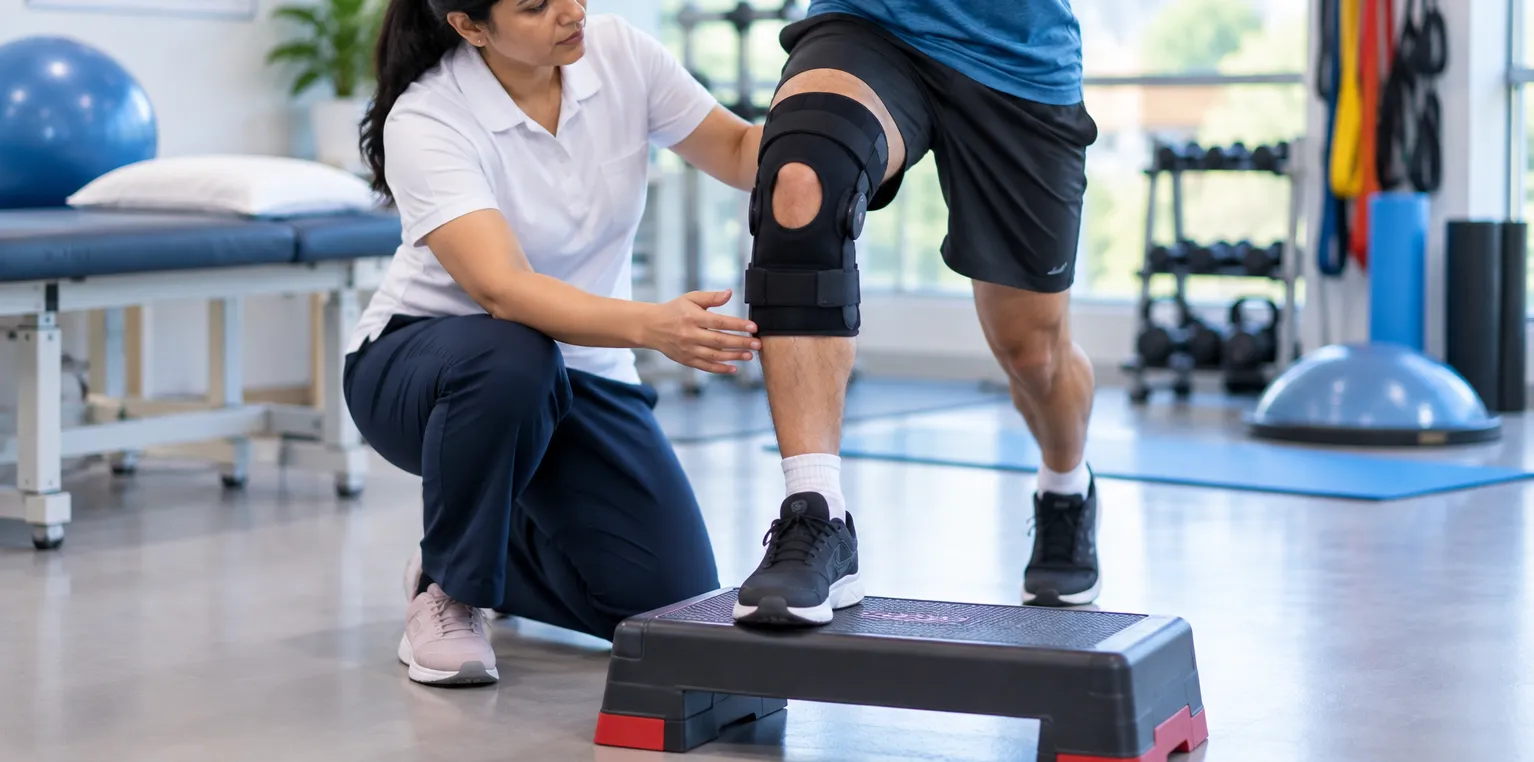
An anterior cruciate ligament injury can affect far more than knee pain. Strength, balance, confidence, jumping ability, and movement control may all change during recovery.
Because of this, ACL rehab should usually be viewed as a progression through functional milestones rather than a countdown based only on the number of months since injury.
For patients near Panchpakhadi, Maharashtra, understanding these milestones can make rehabilitation easier to follow and help explain why certain exercises appear at different stages.
Early progress starts with basic knee function
The first phase generally focuses on restoring the foundations needed for later strengthening.
Depending on medical recommendations and whether surgery has been performed, priorities may include:
- Managing swelling
- Improving knee extension
- Gradually restoring flexion
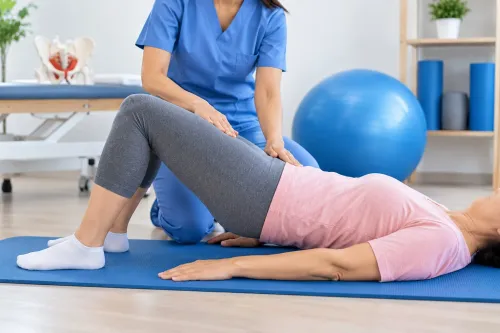
- Activating the quadriceps
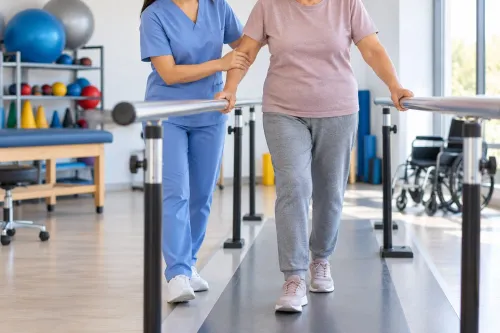
- Improving walking
- Building basic lower-limb control
Regaining comfortable knee extension is particularly important for normal walking mechanics.
Strength becomes increasingly important
As swelling and movement improve, rehabilitation usually becomes more strength-focused.
The quadriceps often lose significant strength after ACL injury and surgery.
Hip muscles, hamstrings, calves, and trunk control also contribute to overall lower-limb stability.
Exercises may gradually progress from controlled basic movements toward:
- Squats
- Step exercises
- Lunges
- Single-leg strengthening
- Resistance training
- Functional movement patterns
The specific programme should reflect the individual's healing stage and physical capacity.
Running is not the first return-to-sport test
Being able to jog can feel like a major breakthrough, but running represents only one part of sporting movement.
Before higher-level activity, the knee may need adequate strength, control, and impact tolerance.
Running progression may begin gradually with manageable distances and speeds before advancing.
Swelling or increased symptoms after activity can provide useful information about how well the knee is tolerating the current training load.
Jumping and landing reveal additional deficits
Many field and court sports involve repeated jumping, landing, and rapid changes of direction.
These movements challenge the knee differently from straightforward running.
Rehabilitation may therefore include progressive drills that assess:
- Landing control
- Knee alignment
- Force absorption
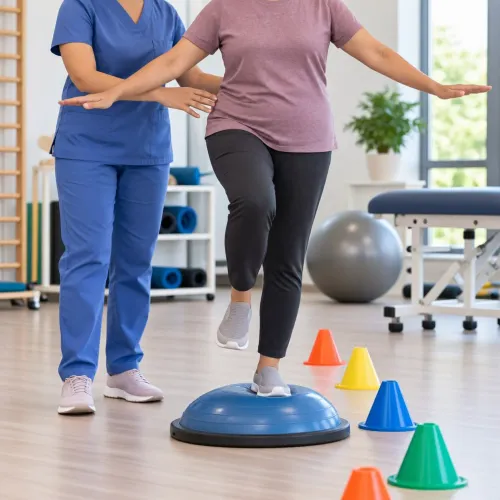
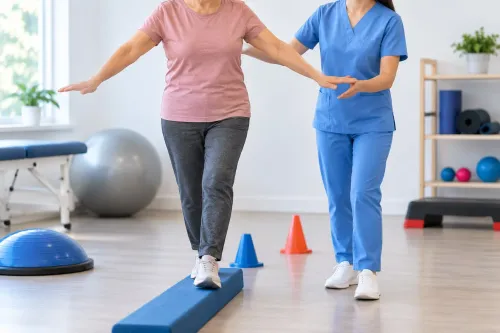
- Single-leg stability
- Coordination
- Confidence
The exercises can become increasingly unpredictable as the patient moves closer to sport.
Return decisions need more than a calendar date
Time after injury remains relevant because biological healing cannot be ignored.
However, reaching a certain month does not automatically mean every patient has achieved the same physical recovery.
A return decision may consider strength measurements, functional tests, sport-specific movement, psychological readiness, and training exposure.
At N V Physiotherapy clinic, ACL rehabilitation can be progressed according to functional ability and the demands the patient eventually needs to meet.
Confidence deserves attention too
Some patients regain good physical strength yet remain nervous during cutting, landing, or sudden movement.
This hesitation can affect performance.
Gradually practising controlled versions of feared movements allows patients to experience success before progressing to faster and more complex tasks.
Sport-specific drills can then bridge the gap between rehabilitation exercises and normal training.
The final stage should look increasingly like the sport
Late ACL rehabilitation should prepare the patient for real athletic demands.
For a football player, this may include acceleration, deceleration, running with direction changes, ball work, and controlled training exposure.
For a recreational gym user, the goal may instead be restoring strength and confidence during squats, lunges, running, and resistance training.
ACL recovery therefore cannot be judged by pain reduction alone. Meaningful progress involves rebuilding knee movement, muscle strength, dynamic control, impact tolerance, sport-specific capacity, and confidence before unrestricted activity resumes.
Keywords