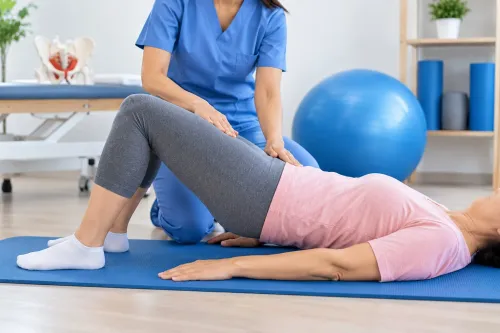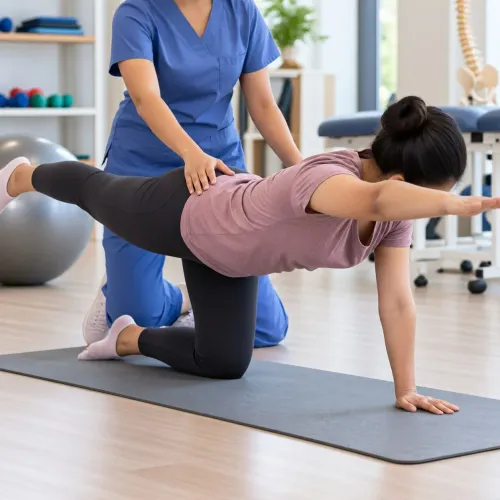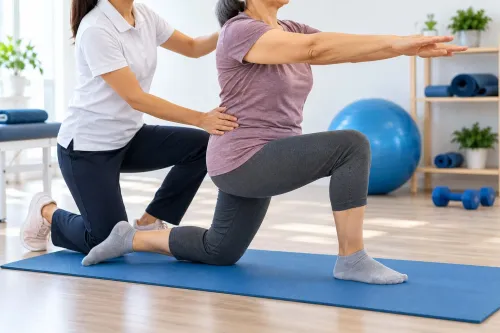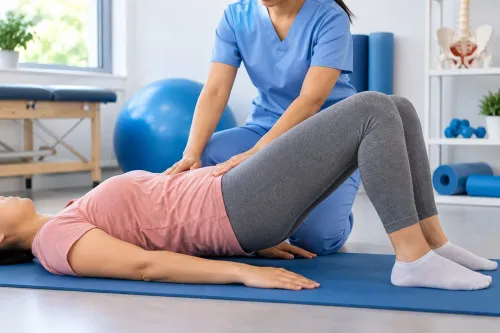
Pelvic health concerns can affect exercise, work, travel, sleep, and everyday confidence, yet many women hesitate to discuss them. Pelvic floor physiotherapy provides a rehabilitation-based approach to problems involving pelvic floor muscle strength, coordination, endurance, and function.
Women near Panchpakhadi experiencing urinary leakage, pelvic floor weakness, postpartum changes, or difficulty returning comfortably to physical activity may benefit from understanding how pelvic health physiotherapy works.
Understanding the Pelvic Floor
The pelvic floor consists of muscles that support the pelvic organs and contribute to bladder and bowel control.
These muscles also work alongside the abdominal muscles, diaphragm, and surrounding structures during breathing, lifting, exercising, coughing, and other activities.
Pelvic floor problems are therefore not always simply a matter of weak muscles. Coordination and excessive muscle tension can also influence symptoms.
When Pelvic Health Assessment May Be Relevant
Women may consider discussing pelvic floor symptoms when they experience:
- Urine leakage while coughing or sneezing
- Leakage during exercise
- Difficulty controlling urinary urgency
- Pelvic floor weakness following childbirth
- Changes in bladder control around menopause
- Difficulty returning to certain physical activities
These symptoms can have different underlying factors, making individual assessment more useful than assuming every woman needs the same exercise.
Why Exercise Technique Matters
Pelvic floor strengthening is sometimes reduced to the instruction to 'do Kegels.' Correct pelvic floor rehabilitation can be more detailed.
Some women find it difficult to identify the correct muscles. Others may hold their breath, tighten surrounding muscles excessively, or perform contractions without adequate relaxation.
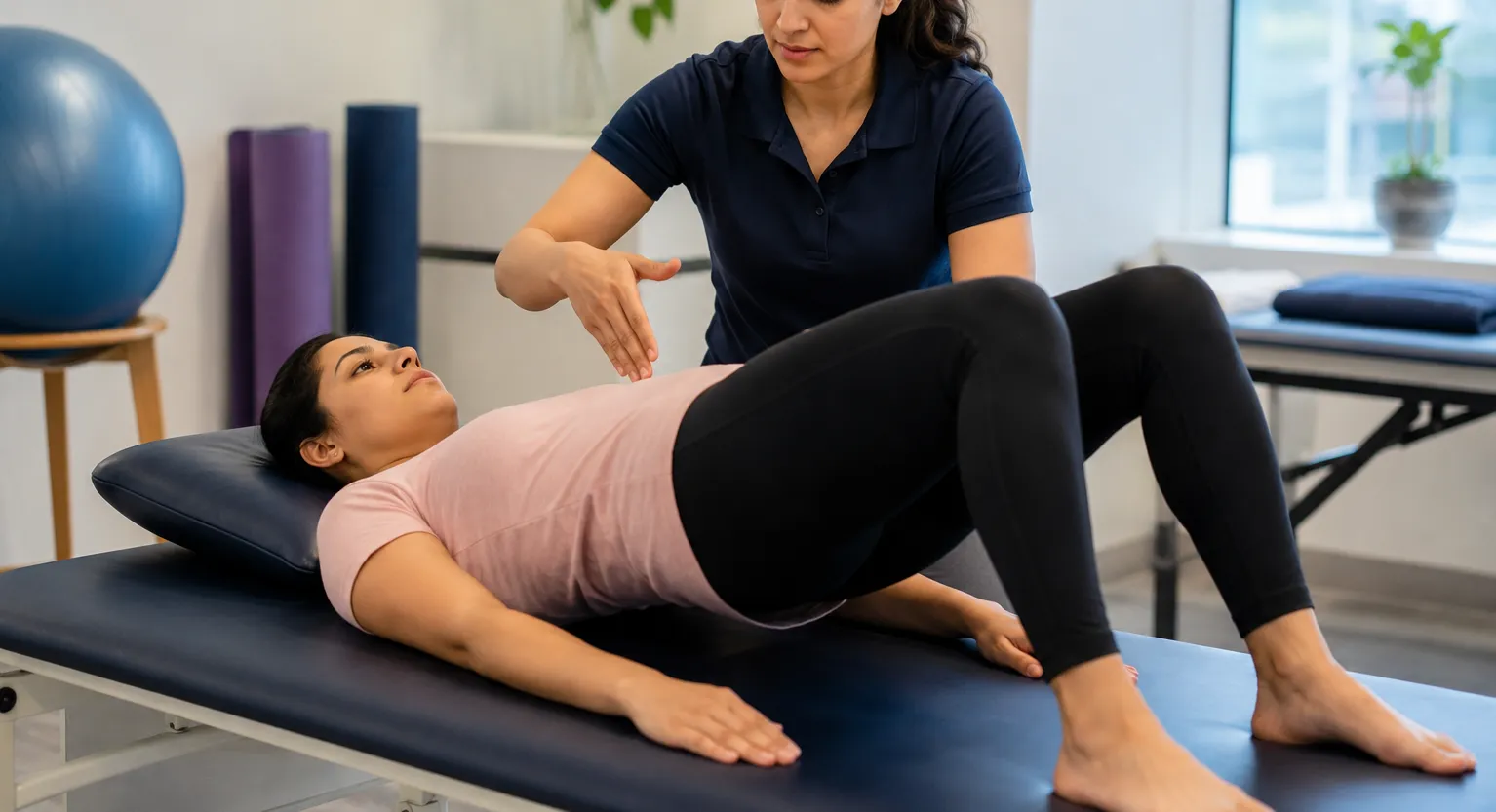
Depending on assessment findings, physiotherapy may address contraction, relaxation, endurance, coordination, breathing, and movement patterns.
Looking Beyond One Muscle Group
Pelvic health rehabilitation may also consider the trunk, hips, posture, breathing, and movement habits.
For example, how pressure is managed during lifting or exercise can be relevant to pelvic floor symptoms. Core and pelvic floor muscles need to coordinate rather than work as completely separate systems.
At N V Physiotherapy Clinic, physiotherapy programmes can be adapted according to individual symptoms, physical findings, and functional requirements.
Pelvic Health Through Different Life Stages
A woman's pelvic health requirements may change during pregnancy, after childbirth, around menopause, and with ageing.
A new mother returning to exercise may require a different programme from a post-menopausal woman experiencing new bladder-control concerns.
Similarly, women participating in running, gym training, or other high-impact activities may need rehabilitation that considers the demands of their chosen activity.
Knowing When to Discuss Symptoms
Urinary leakage and pelvic floor problems should not automatically be accepted as an unavoidable part of childbirth or ageing.
Persistent symptoms can be discussed during an appropriate healthcare assessment so that contributing factors can be identified.
Physiotherapy may form part of conservative management when pelvic floor muscle function is involved. The objective is to provide exercises and movement strategies appropriate to the individual rather than applying the same routine to every patient.
For women experiencing pelvic health concerns, recognising symptoms and seeking an assessment can be an important first step towards understanding what type of rehabilitation may be suitable.
Keywords