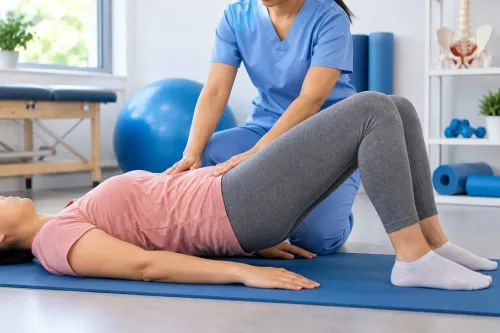

A headache that appears with neck tightness is not automatically caused by posture, and treating the neck without checking the headache pattern can miss migraine, medication overuse, or a medical emergency. You will learn how to recognise warning signs, understand a physiotherapy assessment, choose appropriate treatment and exercises, and adjust daily activities without forcing your neck into a rigid “perfect” position.
Key takeaways
- Track whether headache pain changes with neck movement, posture, or rest.
- Seek medical assessment first for sudden, severe, neurological, fever-related, or injury-linked headaches.
- Expect checks of neck movement, strength, posture, nerve signs, and headache triggers.
- Use graded exercises and frequent work breaks instead of forceful neck stretching.
How can you tell a posture-related headache from other headache types?
A posture-related headache usually builds during sustained neck loading, such as laptop work, phone use, driving, or prolonged reading. It often starts around the upper neck or base of the skull, changes when you move or support your neck, and eases after movement or rest.
“Neck tension headache” is a useful description, not a formal diagnosis, and no single sitting posture proves the cause.
| Headache type | Clues that point away from a posture-related cause |
|---|---|
| Migraine | Throbbing or one-sided pain, nausea, light or sound sensitivity, visual symptoms, or worsening with ordinary activity. Neck pain can occur during migraine. |
| Tension-type headache | Pressing or tightening pain on both sides, usually without nausea; neck tightness may accompany it but does not establish a neck source. |
| Cervicogenic headache | A specific cervical disorder plus reproduced pain with neck movement or testing, restricted range, and a consistent neck-to-head pattern. It is not synonymous with tight muscles. |
| Sinus headache | Fever, blocked or discharging nose, facial pressure, or pain linked to an acute sinus infection. |
| Medication-overuse headache | Headache on 15 or more days monthly with regular overuse for over three months; thresholds are 10 days for triptans, opioids, or combination analgesics, and 15 for paracetamol or NSAIDs. |
| High blood pressure or another condition | A new, severe, rapidly changing, or medically unusual headache needs clinical assessment; high blood pressure rarely causes headache unless markedly elevated. |
Imaging findings such as disc wear or reduced neck curve do not prove causation. Track headache days, triggers, neck movement, and medication use.
Which warning signs mean you need medical assessment first?
Do not start routine physiotherapy if the headache is sudden, severe, unfamiliar, or accompanied by signs of illness affecting the brain, blood vessels, or nervous system. A thunderclap headache, which reaches maximum intensity within seconds or minutes, needs emergency assessment.
| Warning sign | What to do |
|---|---|
| Thunderclap headache or major change in a familiar headache pattern | Seek emergency medical care |
| Headache after trauma, especially with vomiting, drowsiness, or worsening pain | Attend an emergency department |
| Fever and neck stiffness, confusion, fainting, or seizure | Call emergency services |
| New weakness or numbness, trouble speaking, loss of vision, double vision, or poor coordination | Treat as neurological symptoms during headache and seek urgent care |
| New headache during pregnancy or after delivery | Obtain urgent medical assessment |
Do not let a recent neck manipulation delay care. Acute unusual neck pain or headache followed by dizziness, double vision, weakness, numbness, speech difficulty, or poor coordination requires emergency evaluation. These warning signs need medical investigation before exercise, massage, or manual therapy.
What does a physiotherapist check before treating a neck-related headache?
A physiotherapy headache assessment tests whether the neck is linked to symptoms; it does not assume tight muscles are the cause. The clinician records location, onset, duration, frequency, and timing, then asks whether screen work, driving, reading, waking, or neck movement triggers or relieves pain.
Nausea, light or sound sensitivity, visual symptoms, and activity-related worsening matter because migraine can include neck pain.
- They measure cervical range of motion and joint movement, noting whether restricted or painful motion reproduces the familiar headache.
- They assess tenderness in cervical, suboccipital, shoulder, and upper-back muscles without treating tenderness as proof.
- They screen for nerve symptoms, including arm pain, numbness, tingling, weakness, altered reflexes, or coordination changes.
- They check jaw involvement: clenching, clicking, limited opening, chewing pain, and referral toward the temple or face.
- They review workstation demands, sleep position and headache timing, phone use, medication use, and sleep quality.
- They test functional triggers such as lifting, coughing, turning, or sustained posture.
X-rays or scans showing disc degeneration, reduced cervical lordosis, or minor joint changes do not prove the neck caused the headache. Clinical findings must show a consistent neck–headache relationship; imaging is reserved for suspected structural or neurological conditions.
Which physiotherapy treatments address recurring symptoms, and what can you expect?
Cervical mobility exercises and thoracic mobility reduce stiffness that makes sustained screen work or head turning provocative; they do not “realign” the spine or guarantee headache prevention. Treatment usually combines movement practice with strength, coordination, and load management rather than relying on one technique.
| Treatment | Main purpose | What to expect |
|---|---|---|
| Cervical mobility exercises | Restore comfortable neck movement | Frequent, gentle repetitions; stop if dizziness, arm symptoms, or escalating pain appears |
| Thoracic mobility | Improve upper-back movement and reduce neck compensation | Extension or rotation drills, progressed gradually |
| Deep neck-flexor training | Build low-load neck control and endurance | Small nodding actions, not forcing the chin backward all day |
| Scapular strengthening | Improve shoulder-blade support during arm and desk activity | Progress from low-load control to functional resistance work |
| Breathing exercises | Reduce breath-holding and excessive accessory-neck-muscle effort | Slow, relaxed breathing linked with movement |
| Soft-tissue techniques and manual therapy | Temporarily reduce tenderness and improve movement tolerance | Relief may last hours or days; it is not the whole rehabilitation plan |
| Ergonomic changes and graded activity | Reduce repeated loading without avoiding normal activity | Adjust screen, chair, tasks, and exercise in manageable steps |
Massage or hands-on treatment can make movement easier, but strengthening and movement practice address the capacity that keeps symptoms recurring. Expect a therapist to adjust dose to irritability, review headache frequency and function, and reassess if symptoms worsen.
N V Physiotherapy clinic - 9076000356 can use that process to tailor treatment rather than repeat passive relief alone.
Related service
Headaches Therapy ₹800 At N V Physiotherapy Clinic in Thane, Dr. Nikita Vaidya Kulkarni (PT) offers specialized headache therapy designed to address the root causes of... View service → |
What should a safe home program look like?
Begin with low-dose movement, not a hard stretching session. These home exercises for neck headache should feel controlled and comfortable; mild, familiar discomfort is acceptable, but symptoms must settle soon after practice.
- Move the neck slowly through flexion, extension, rotation, and side-bending: 5 repetitions each direction, once or twice daily.
- Add thoracic extension over a chair back or gentle thoracic rotation: 8 repetitions per side, daily.
- Practise craniocervical flexion lying down by making a small nod without lifting your head: hold 5 seconds for 6–8 repetitions, once daily. Keep the superficial neck muscles relaxed rather than forcing your chin backward.
- Train the shoulder blades with supported rows or wall slides: 8–12 repetitions, three days per week.
- Walk or cycle easily for 5–10 minutes, five days per week. Add 2–5 minutes each week if your headache and neck symptoms remain stable.
Progress one exercise at a time. Increase repetitions before adding resistance, and keep the next day no worse than your usual baseline.
Stop if you develop dizziness during neck exercises, new arm pain, tingling, numbness, weakness, vision changes, or an escalating headache. Arrange reassessment if a flare is severe or remains clearly worse beyond 24–48 hours; do not push through it.
How can you reduce neck loading during work and judge whether treatment is helping?
Set screen height so the top is at eye level and the screen is directly ahead, reducing prolonged neck flexion. Use chair back and arm support, keep the keyboard close with elbows relaxed, and place the mouse beside the keyboard rather than reaching.
Hold your phone at eye level, use a stand for reading, and adjust the car seat so the headrest supports your head while your shoulders stay relaxed.
- Change position regularly; posture variation matters more than maintaining one “perfect” posture.
- Take work breaks every 30–45 minutes for brief walking and comfortable neck movement.
- Avoid forceful self-cracking and aggressive neck manipulation, which can worsen pain or cause injury.
Track headache days, duration, intensity, medication days, neck movement, sleep, and work tolerance. Medication-overuse headache becomes a concern with headaches on 15 or more days monthly plus overuse for over three months: 10 or more medication days for triptans or combination drugs, or 15 for paracetamol or NSAIDs.
Improvement means better function, not merely temporary tenderness relief.
Frequently asked questions
How can you tell a posture-related headache from other headache types?
It often builds during sustained laptop, phone, driving, or reading posture, starts near the upper neck or skull base, changes with neck movement or support, and eases with movement or rest.
Which warning signs mean you need medical assessment first?
Seek medical assessment before physiotherapy for a sudden severe headache, new neurological symptoms, fever with neck stiffness, a headache after significant injury, or a new pattern that is rapidly worsening.
What does a physiotherapist check before treating a neck-related headache?
A physiotherapist checks your headache history, posture, neck movement, muscle strength, joint mobility, nerve-related signs, work habits, and movements that reproduce or relieve symptoms.
Which physiotherapy treatments address recurring symptoms, and what can you expect?
Treatment can combine education, posture and activity changes, manual techniques when appropriate, and graded exercises for neck and upper-back movement, strength, and endurance. Progress is judged by fewer headaches, lower intensity, improved movement, and better tolerance of daily tasks.
What should a safe home program look like?
A safe program uses comfortable, controlled movements and gradual strengthening selected after assessment. Stop an exercise that causes escalating pain, dizziness, new neurological symptoms, or a lasting flare.