Ageing does not automatically mean giving up physical activity. In fact, maintaining movement can play an important role in preserving strength, mobility, balance, and independence. The key is choosing safe exercises for elderly adults according to their current physical abilities rather than following demanding routines designed for younger or highly active people.
For senior citizens in Naupada, physiotherapy can provide a structured way to remain active when arthritis, weakness, balance difficulties, previous injuries, or prolonged inactivity make exercise more challenging.
Start With Functional Movements
Some of the most useful exercises are based on movements required in everyday life.
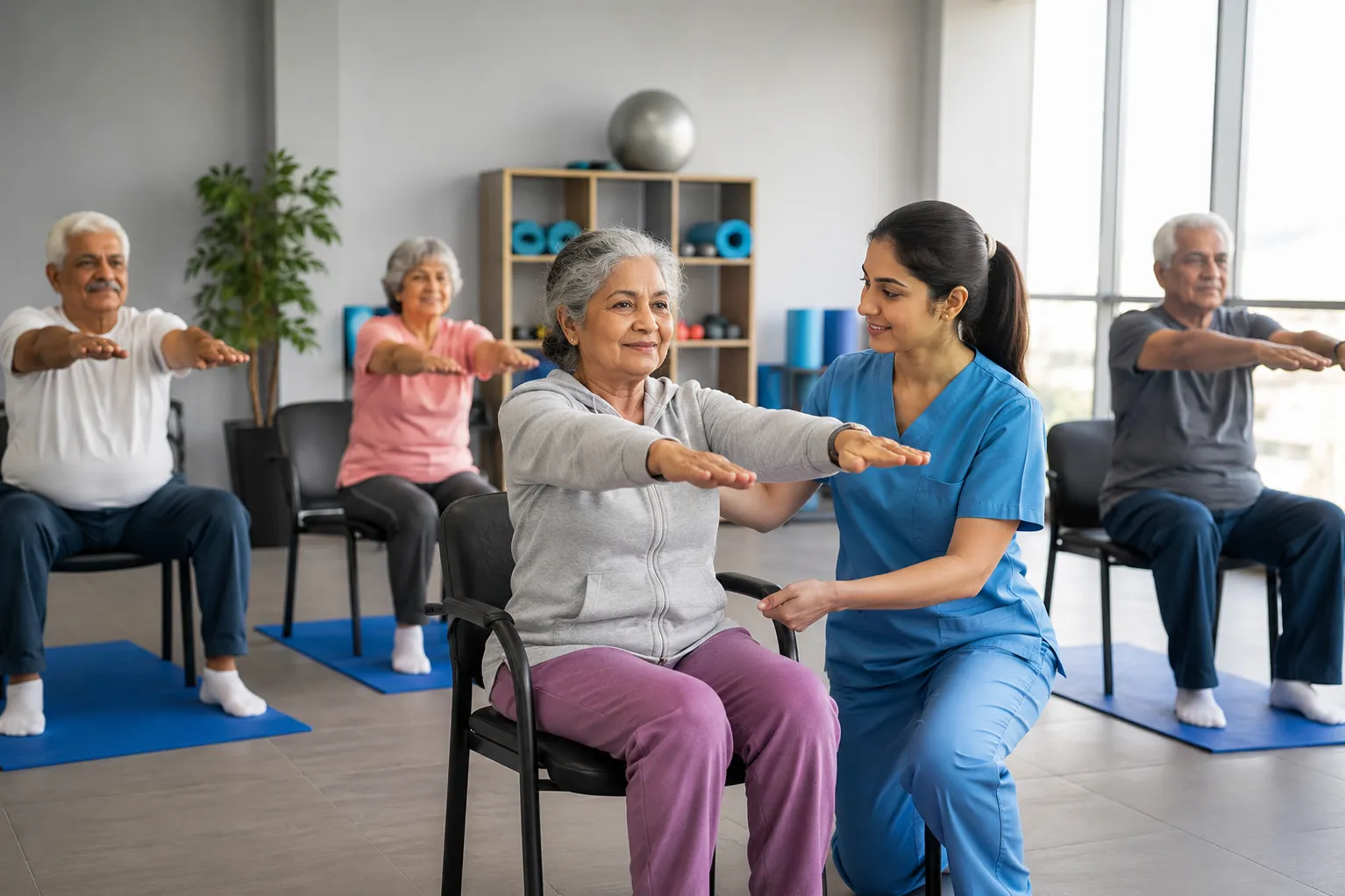
Sit-to-stand practice, for example, strengthens muscles used when getting out of a chair, using the toilet, or rising from a bed.
A sturdy chair can provide support while practising. The number of repetitions should depend on the person's ability rather than an arbitrary target.
Include Gentle Mobility Exercises
Joint stiffness can affect walking, dressing, reaching, and household activities.
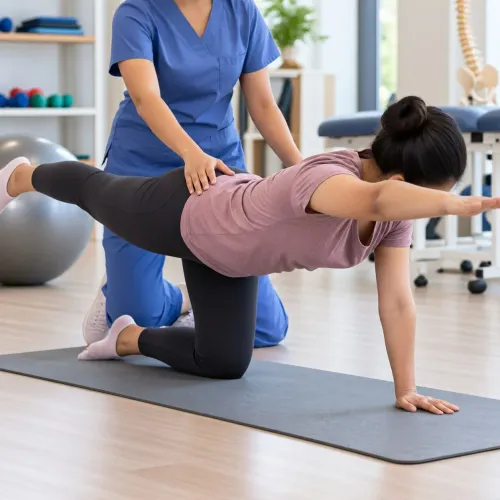
Gentle movements involving the ankles, knees, hips, shoulders, and trunk can help maintain mobility when performed appropriately.
Exercises should remain controlled. Significant pain, sudden swelling, dizziness, or unusual symptoms should not simply be ignored in an attempt to finish a routine.
Work on Balance Carefully
Balance can change with age due to reduced muscle strength, neurological conditions, vision changes, joint problems, and other factors.
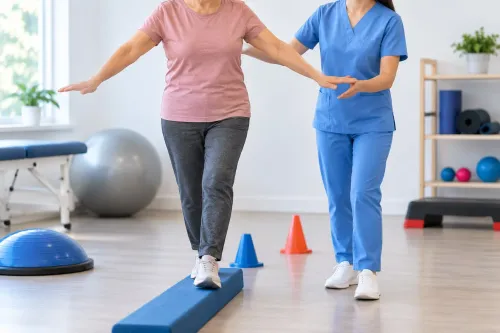
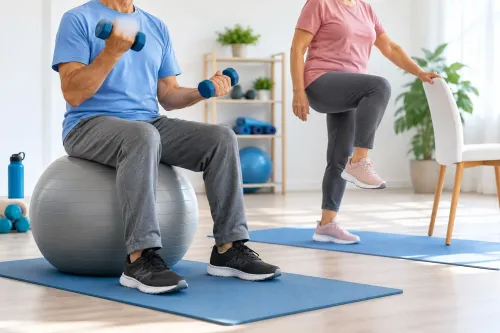
Balance exercises may involve supported standing, controlled weight shifting, or gradually changing the standing position.
Safety is especially important for anyone with a history of falls. Difficult balance exercises should not be attempted independently when a person already feels unstable.
Strengthen the Lower Body
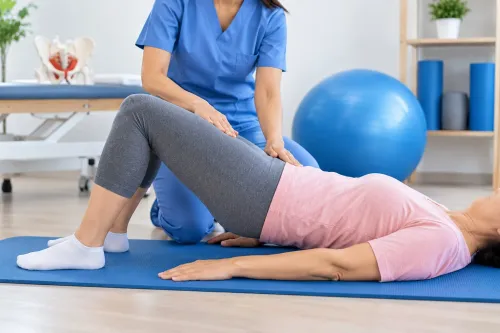
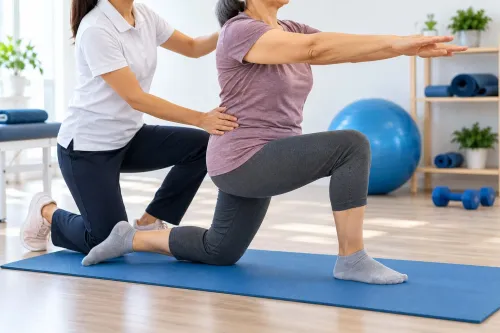
Strong legs contribute to walking, stair climbing, standing, and balance.
Depending on ability, exercises may target:
- Thigh muscles
- Hip muscles
- Calf muscles
- Ankle control
- Trunk stability
Resistance can be introduced gradually when appropriate.
Walking Can Be Part of the Programme
Walking is accessible and practical, but there is no single distance that every older adult should achieve.
Someone who is already active may comfortably manage longer walks. Another person recovering from surgery or illness may initially require short periods of walking separated by rest.
Walking quality is equally important. Shuffling, repeated stumbling, reduced foot clearance, or dependence on furniture for support can indicate a need for professional gait and balance assessment.
Avoid Comparing Exercise Capacity
Two people of the same age can have completely different exercise needs.
Medical history, arthritis, previous surgery, cardiovascular fitness, neurological health, balance, and existing strength all influence what is appropriate.
N V Physiotherapy Clinic works with older adults requiring physiotherapy and geriatric rehabilitation. Assessment can help determine which exercises match a person's current abilities and which movements require modification.
The aim of exercise during later life is not simply to complete a workout. It is to maintain the physical abilities needed for daily independence. When pain, weakness, falls, or reduced mobility make exercise difficult, an individual physiotherapy programme can provide a safer and more purposeful starting point.
Keywords