Persistent dizziness can gradually change the way a person moves. Head turns become cautious, busy environments may feel uncomfortable, and walking while looking around can become difficult. Vestibular rehabilitation is a specialised physiotherapy approach used for certain balance and inner-ear related conditions when assessment indicates that exercise-based rehabilitation is appropriate.
For patients in Ghantali experiencing ongoing movement-related dizziness or imbalance, understanding what vestibular rehabilitation involves can make the treatment process clearer.
What the Vestibular System Does
The vestibular system is located within the inner ear and contributes to balance, spatial orientation, and stabilising vision during head movement.
It works alongside vision and sensory information from muscles and joints.
When vestibular function is disrupted, patients may experience dizziness, imbalance, blurred vision during movement, or difficulty navigating visually busy environments.
Rehabilitation Is Based on Symptoms
Vestibular rehabilitation is not one standard exercise routine.
Depending on assessment findings, a programme may include exercises involving:
- Eye and head coordination
- Gaze stability
- Controlled head movements
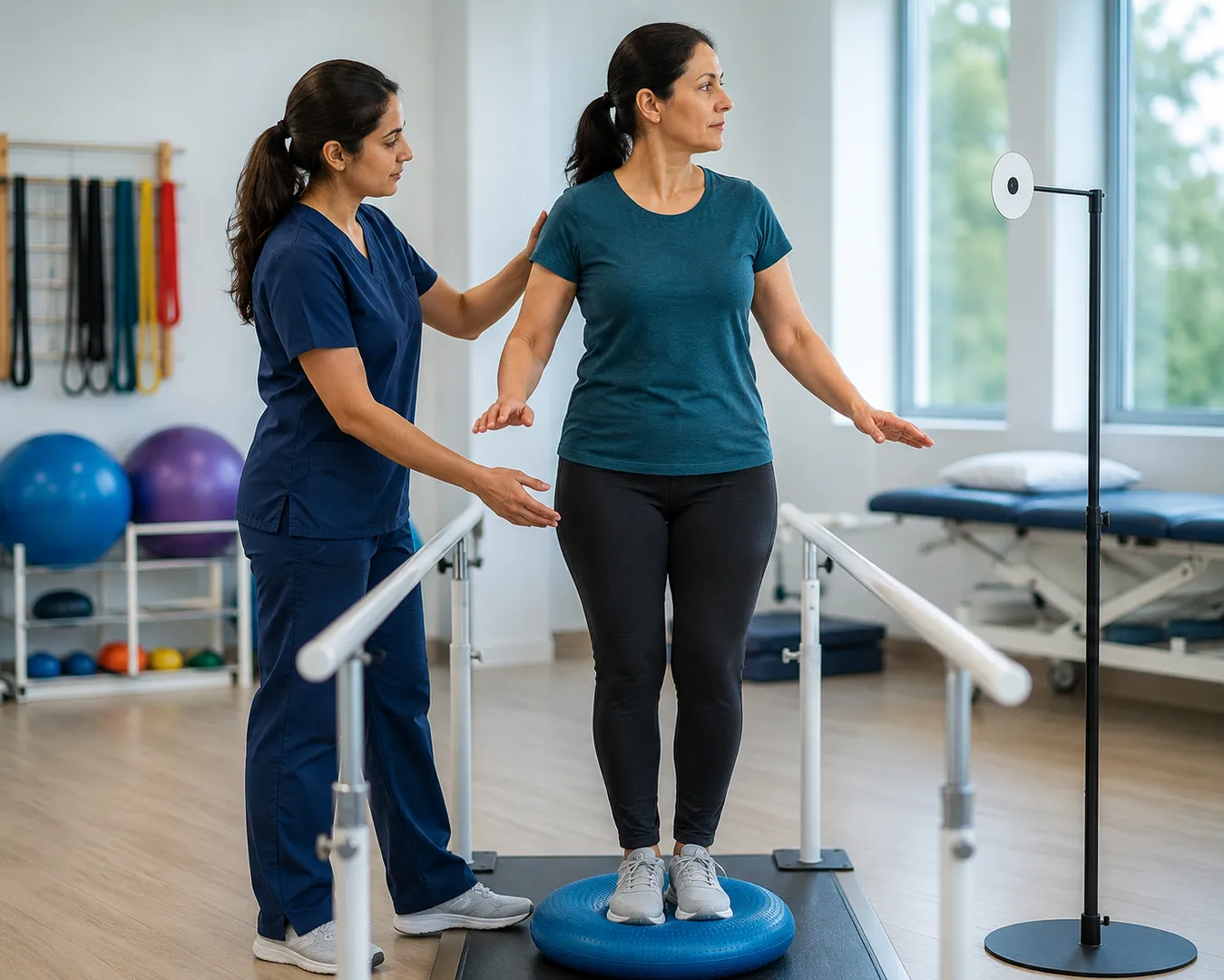
- Standing balance
- Walking activities
- Habituation to specific movements
- Functional mobility
The exercises are selected according to the patient's condition and tolerance.
Why Some Exercises Temporarily Trigger Symptoms
Certain vestibular exercises deliberately introduce controlled movements that produce mild symptoms.
The purpose is not to make the patient severely dizzy. Instead, carefully graded exposure may help the nervous system adapt to movement when this approach is appropriate for the condition.
Exercise intensity needs to be monitored. Excessive symptoms are not a sign that rehabilitation is automatically more effective.
Balance Training May Be Necessary
Some patients experience more imbalance than spinning.
Balance exercises can challenge the way the body uses visual, vestibular, and sensory information. The difficulty can be progressed gradually according to ability.
Walking exercises may also be introduced when turning the head or changing direction causes instability.
Functional Goals Matter
Successful rehabilitation is not simply about performing exercises in a clinic.
Patients often want to return to specific activities such as travelling independently, walking outdoors, working comfortably, exercising, or moving around crowded environments.
These goals should influence exercise selection and progression.
N V Physiotherapy Clinic can assess appropriate patients for vestibular and balance rehabilitation and develop exercises according to individual findings.
When Another Evaluation May Be Needed
Dizziness can have several causes, and vestibular physiotherapy is not appropriate for every presentation.
Symptoms associated with sudden neurological changes, fainting, severe new headache, new weakness, or significant acute illness require medical attention.
For suitable vestibular conditions, rehabilitation can provide a structured way to retrain balance and movement tolerance.
Patients who have started restricting daily activities because of persistent dizziness may particularly benefit from understanding whether a vestibular problem is contributing to their limitations. A targeted assessment helps determine the appropriate rehabilitation pathway instead of relying on generic dizziness exercises.
Keywords