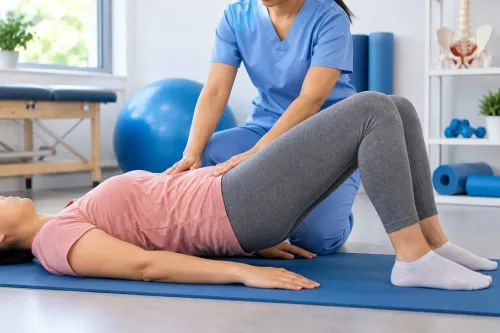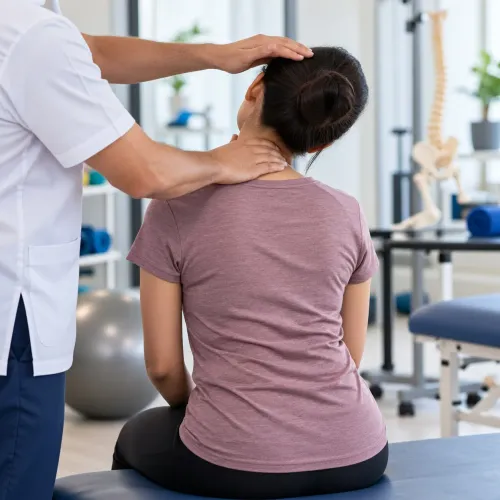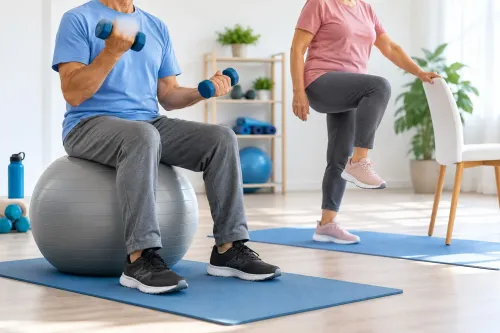
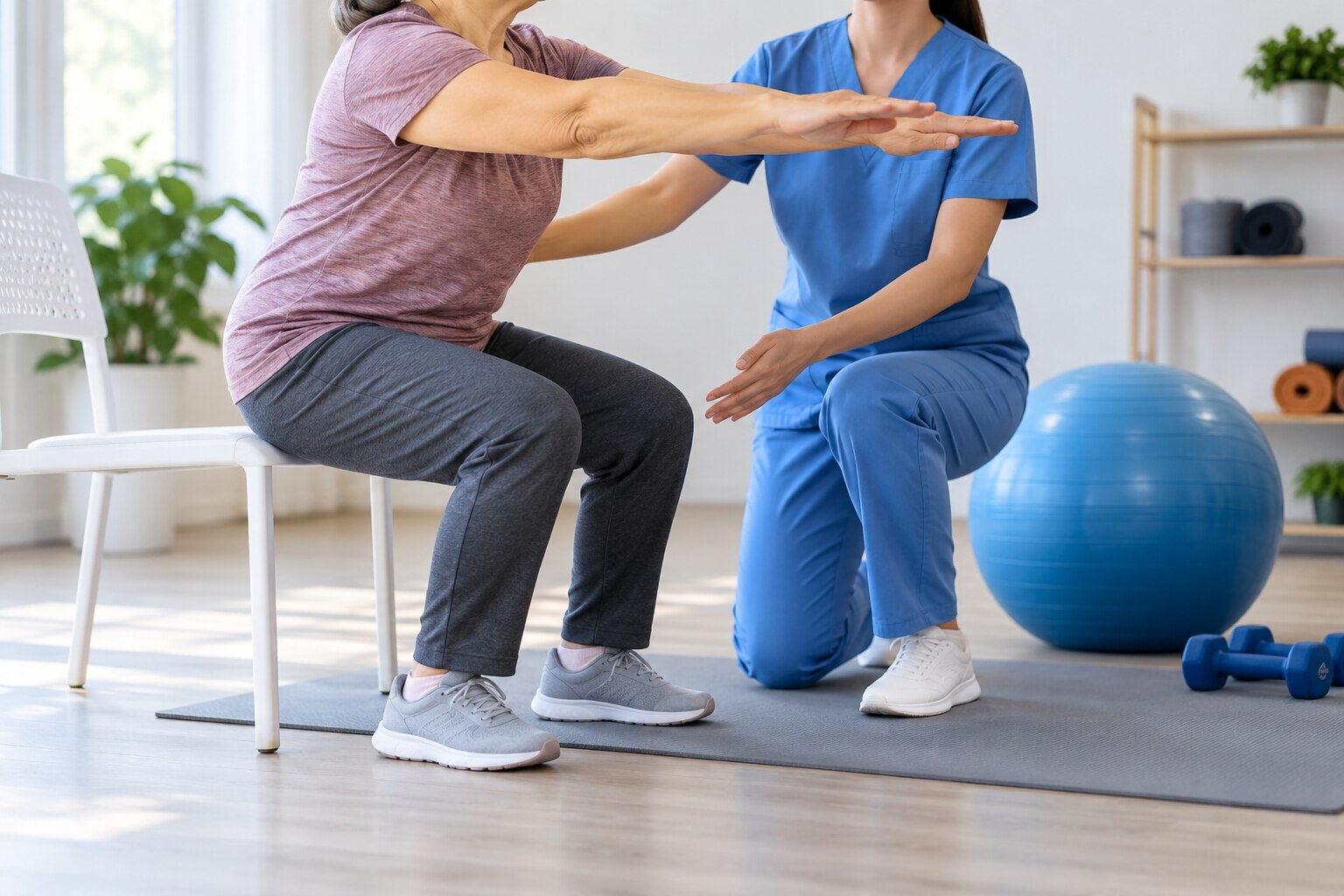
A useful osteoporosis exercise plan must do more than prescribe a daily walk: it must match resistance, weight-bearing, balance, posture, and mobility work to your fracture risk and movement ability. By the end, you will know how to screen for safety, structure a week, exercise at home, progress sensibly, and recognise when symptoms require medical review.
Key takeaways
- Check fracture history, fall risk, movement control, and medical conditions before exercising.
- Combine resistance, weight-bearing, balance, and mobility work across the week.
- Use controlled repetitions, stable support, and pain-free movement during each exercise.
- Progress load gradually and reassess function when pain or movement changes.
Check Fracture Risk and Exercise Readiness Before You Start
A DXA T-score does not decide whether an exercise is safe. Before beginning, assess fracture history, fall risk, movement control, and medical conditions alongside bone density. This is the foundation of osteoporosis exercise safety.
- Review the DXA T-score, previous or suspected vertebral fracture, other fragility fracture, height loss, new stooped posture, and back or hip pain. Create a vertebral fracture screening baseline from symptoms, posture, height, and available imaging.
- Record falls, dizziness, vision problems, walking-aid use, balance, leg strength, posture, and confidence moving on stairs or uneven ground.
- List medicines and conditions that affect bone, alertness, heart function, blood pressure, joints, or healing. Include recent surgery and any fracture still under treatment.
- Test basic movement before adding impact or heavy resistance. Repeated loaded spinal flexion, sit-ups, toe-touch stretches, and forceful twisting need particular caution after vertebral fracture or with poor movement control.
- Choose impact only after screening. Brisk stepping or heel drops come before jumping; swimming and cycling build fitness but do not replace weight-bearing and resistance work.
Get medical clearance before exercising if you have a suspected or recent fragility fracture, sudden or persistent back or hip pain, unexplained height loss, a new stoop, severe balance impairment, fainting, uncontrolled medical disease, or plans for heavy lifting or jumping. Stop and seek assessment if sharp pain begins during or after exercise.
Build a Week Around Resistance, Weight-Bearing, Balance, and Mobility
A weekly osteoporosis exercise plan should include 2–3 resistance sessions, 3–5 weight-bearing exercise sessions, balance practice most days, and short mobility or posture work. Keep at least one easier recovery day, and avoid scheduling demanding sessions on consecutive days.
- Monday: Resistance training for the hips, legs, back, shoulders, and arms, followed by balance work.
- Tuesday: Brisk walking or stair practice, then mobility exercises.
- Wednesday: Resistance training and balance practice.
- Thursday: Cycling or swimming for aerobic fitness, not as the main bone-loading session.
- Friday: Resistance training or suitable impact exercise, followed by posture work.
- Weekend: An easy walk, balance drills, and rest as needed.
Use a meaningful resistance that makes the final repetitions difficult without losing control or spinal alignment. Add resistance gradually instead of staying permanently with very light weights.
For walking versus cycling and swimming, the bone-loading difference is important:
| Activity | Main benefit | Bone-loading role |
|---|---|---|
| Walking | Cardiovascular fitness and mobility | Loads the legs, but ordinary walking alone often provides too little stimulus for major bone-density gains |
| Cycling | Aerobic fitness with low joint impact | Provides limited weight-bearing loading |
| Swimming | Whole-body aerobic conditioning | Provides limited skeletal loading |
| Stairs or suitable impact | Leg strength and mechanical loading | Loads bone more strongly when screening and movement control support it |
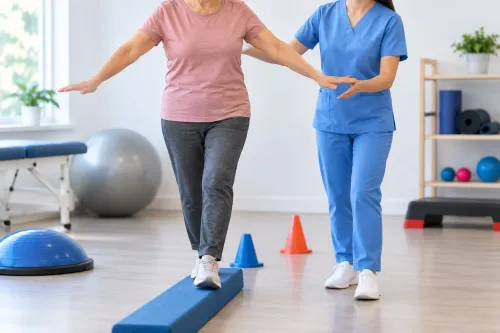
Balance exercises such as narrowed-stance standing, supported single-leg work, and multidirectional stepping help reduce falls even when they do not increase bone density. Choose jumping or other impact only when your fracture history, symptoms, and movement control make it appropriate.
Use Simple Exercises With Clear Setup, Repetitions, and Support
Use a stable kitchen counter or heavy table for support, wear firm shoes, and keep a clear floor around you. Move through a pain-free range with your spine long; breathe out during the effort and breathe in as you return, without holding your breath.
- Sit-to-stands: Place a chair against a wall, sit near its edge, and keep your knees aligned with your second toes. Perform 1–2 sets of 8–12, pushing through your feet and keeping your chest lifted.
- Wall push-ups: Face a wall, place your hands at shoulder height, and step back until your body forms a straight line. Complete 1–2 sets of 8–12; exhale as you press away.
- Heel raises: Hold the counter, rise slowly onto both toes, pause for one second, and lower with control. Do 1–2 sets of 10–15 while breathing normally.
- Step-ups for osteoporosis: Use the bottom stair or a 10–15-centimetre step with a rail nearby. Step up and down slowly for 6–10 repetitions per leg, exhaling as you rise.
| Exercise | Setup and movement | Stop safely when |
|---|---|---|
| Sit-to-stands | Chair against wall; keep your back neutral and hinge slightly at the hips | Knees collapse inward, pain rises, or you need to drop into the chair |
| Wall push-ups | Hands on wall; keep ribs stacked over hips and avoid rounding your back | Shoulder or wrist pain appears, or you lose alignment |
| Heel raises | Counter support; lift and lower evenly | Calf pain, cramping, or increasing unsteadiness occurs |
| Step-ups | Low step and rail; place the whole foot on the surface | The knee buckles, balance fails, or hip or back pain starts |
Do not add sit-ups, toe touches, deep rounded-back lifting, or forceful twisting without professional guidance, particularly after a vertebral fracture. Stop immediately for sharp pain, chest pain, faintness, new weakness, or sudden breathlessness.
Progress the Load Without Ignoring Pain or Movement Changes
Add only one challenge at a time after you complete the current exercise with steady breathing, controlled alignment, and no increase in symptoms across several sessions. Progressing repetitions comes before resistance; increase step height next, and add impact only after brisk stepping and heel raises remain stable without balance loss.
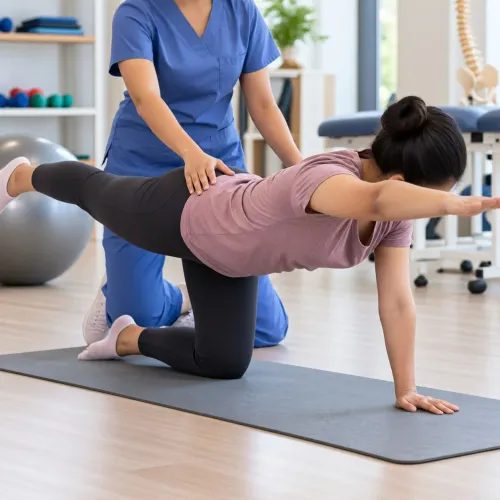
1. Keep a neutral spine and avoid spinal flexion and twisting if you have a vertebral fracture, kyphosis, or high fracture risk. Replace sit-ups, toe touches, rounded-back lifting, and forceful rotation with hip hinges, supported rows, wall presses, and controlled sit-to-stands.
2. Reduce range, resistance, or repetitions when arthritis causes joint swelling, warmth, or pain that lasts into the next day. With dizziness, poor vision, frailty, or a walking aid, exercise beside a fixed support in a well-lit area; use a lower step, slower transitions, seated alternatives, and supervision when needed.
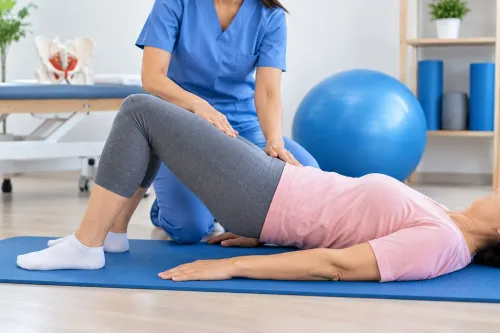
3. Delay jumps and other impact work after a recent fracture, with marked balance impairment, or when movement control breaks down. Use brisk marching, heel drops, or repeated step-ups only when screening shows impact is suitable; a physiotherapist can select the starting level.
Exercise pain warning signs include sudden sharp or deep back pain, new groin or hip pain, sudden limb pain, numbness, weakness, or a noticeable height or posture change. Stop and seek medical advice rather than testing through them. This osteoporosis exercise progression should make movement more capable, not more painful.
Measure Functional Gains and Decide What Support You Need
A 6- to 12-week review should compare the same tasks under the same conditions, not rely on how you feel after one good session. Record repetitions, resistance, pain during and after exercise, confidence, and whether you need hand support.
Repeat the sit-to-stand test, walking speed over a measured distance, and balance time at six weeks and again at 12 weeks. Stronger legs, faster walking, longer balance time, and easier transfers are meaningful osteoporosis exercise outcomes; a DXA scan will not show the full benefit in this timeframe.
| Approach | What it measures | What it cannot decide |
|---|---|---|
| General exercise article | Broad exercise ideas | Whether spinal flexion, impact, or resistance is safe for you |
| Gym program | Load and repetition progression | How fracture history, posture, pain, or balance changes exercise choice |
| Yoga class or online video | Mobility, strength, or balance practice | Whether a pose or movement suits your bone and fall-risk profile |
| Individualized physiotherapy assessment | Strength, gait, posture, balance, fractures, medications, and functional tasks | It still needs review as your ability and symptoms change |
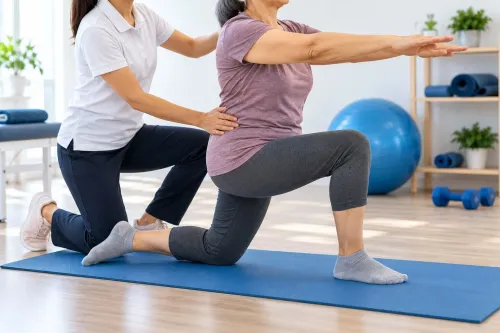
N V Physiotherapy clinic - 9076000356 can use these findings to select safer progressions rather than treating a DXA score as the whole decision. Continue the plan after 12 weeks: strength and balance gains fade when practice stops, while bone-density change remains slower and site-specific.
Related services
Geriatric Rehabilitation Therapy Geriatric Rehabilitation Therapy ₹800 At N V Physiotherapy Clinic in Thane, Dr. Nikita Vaidya Kulkarni (PT) offers specialized geriatric rehabilitation therapy focused on improving... View service → |
Trauma (fracture) Rehabilitation Therapy Trauma (fracture) Rehabilitation Therapy ₹800 At N V Physiotherapy Clinic in Thane, Dr. Nikita Vaidya Kulkarni (PT) provides expert trauma (fracture) rehabilitation therapy to support safe and... View service → |
Frequently asked questions
What should you check before starting an osteoporosis exercise program?
Review fracture history, fall risk, movement control, medical conditions, and exercise readiness rather than relying on a DXA T-score alone.
Which types of exercise belong in an osteoporosis program?
Build your week around resistance training, weight-bearing activity, balance exercises, and mobility work.
How can you make osteoporosis exercises safer?
Use clear setup, controlled repetitions, stable support, and an exercise variation that matches your movement control.
How should you progress osteoporosis exercises?
Increase load or difficulty gradually, while responding to pain, reduced control, or changes in movement.
Related services
Women's Health Care Therapy ₹800 At N V Physiotherapy Clinic in Thane, Dr. Nikita Vaidya Kulkarni (PT) provides specialized women’s health care therapy tailored to every stage of a... View service → |
All Orthopedic Conditions Therapy All Orthopedic Conditions Therapy ₹800 N V Physiotherapy, led by Dr. Nikita Vaidya Kulkarni (PT), offers comprehensive care for a wide range of orthopedic conditions. View service → |