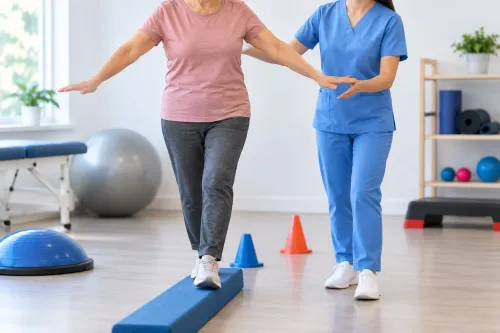
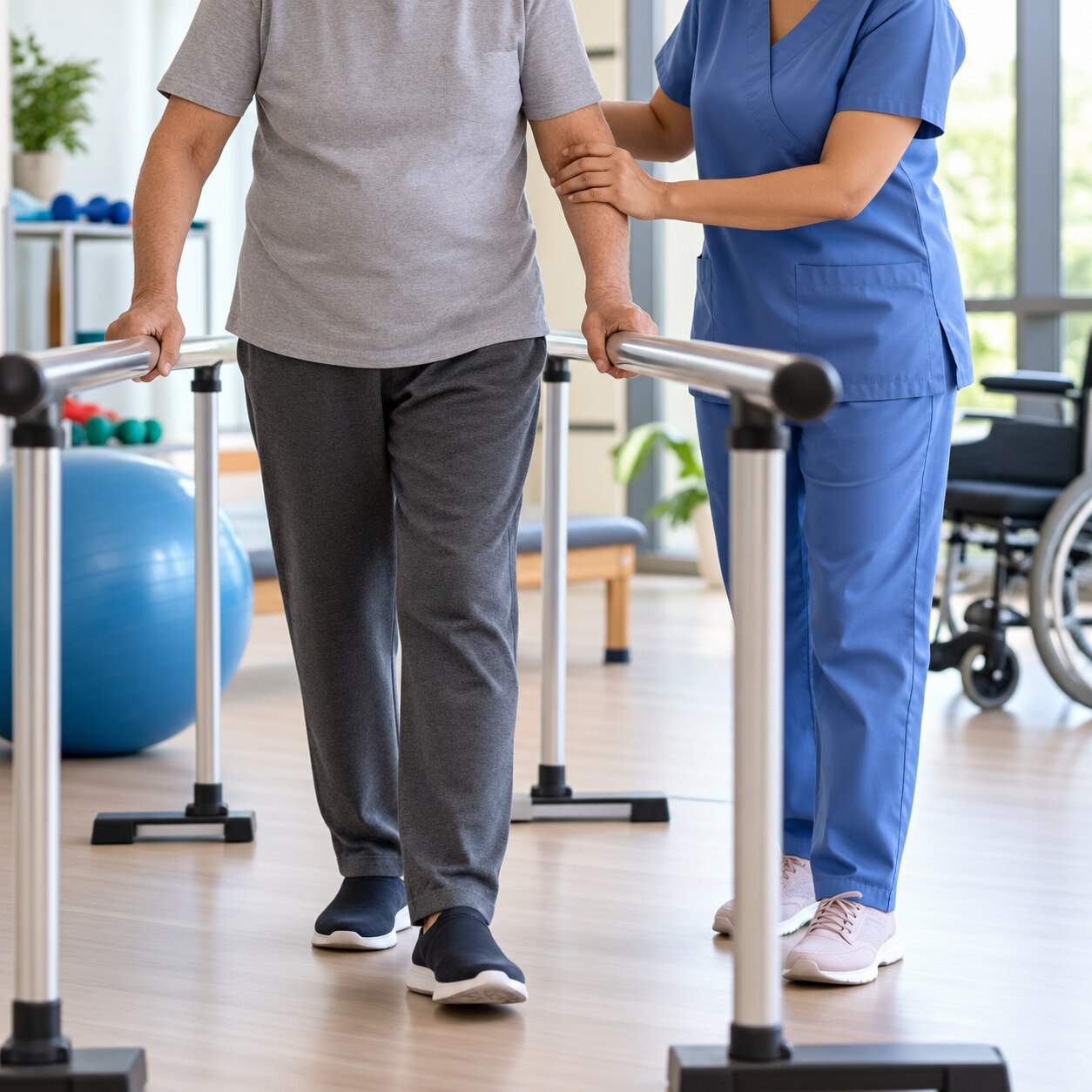
Difficulty standing, turning, climbing stairs, or reaching the bathroom safely can reduce independence long before an older adult stops walking altogether. A useful physiotherapy plan identifies the specific barriers, practises the tasks that matter at home, and adjusts exercise, equipment, and support as ability changes.
Key takeaways
- Start with daily activities you want to regain, not treatment techniques.
- Adapt exercises around pain, fatigue, dizziness, vision, and medical conditions.
- Reduce fall risk by improving strength, balance, walking, and home safety.
- Track progress through real tasks such as stairs, dressing, and shopping.
What happens during an initial geriatric physiotherapy assessment?
A geriatric physiotherapy assessment starts with the daily activity you want to regain, not with a massage table. The physiotherapist asks what makes movement difficult, observes how you move, and checks whether pain, fatigue, dizziness, medication effects, vision, or the home layout is limiting you.
The assessment can include:
- Walking speed and the Timed Up and Go test, which show how quickly and safely you stand, walk, turn, and sit.
- A balance assessment during standing, reaching, turning, and walking, including tasks that resemble real-life movement.
- Lower-limb strength testing to identify weakness affecting walking, chair rises, or stair climbing.
- Joint range of motion, posture, and gait observation to find stiffness, asymmetry, or inefficient movement.
- Transfers and stair use, revealing whether you need your arms, a railing, supervision, or a different technique.
- Fall history, footwear, vision, medication effects, and home hazards, which help explain where risk occurs.
No single score decides whether you are independent. The physiotherapist connects the findings to a practical goal, such as standing from a chair without using your arms or walking to the bathroom safely at night.
If a cane or walking frame is needed, it is matched to your strength, balance, thinking, and home environment, then fitted and practised. Progress is judged by safer, easier completion of meaningful tasks.
Which exercises are used, and how are they adapted to health conditions?
Progressive exercise—not bed rest—is the usual starting point. Sessions combine sit-to-stand practice, heel raises, resistance-band strengthening, balance drills, gait training, stair practice, and flexibility work. The therapist changes repetitions, resistance, speed, hand support, rest periods, and supervision according to symptoms and daily goals.
| Health condition or situation | How the programme is adapted | Typical focus |
|---|---|---|
| Frailty | Begin with supported, low-volume exercise and build challenge gradually; frailty alone is not a reason to avoid strengthening. | Chair rises, heel raises, walking, balance |
| Arthritis | Reduce load during painful or swollen periods without stopping exercise completely. | Joint-friendly strengthening, range of motion, walking |
| Osteoporosis | Avoid forceful spinal bending and twisting, and emphasise upright posture and safe lifting. | Leg strength, posture, balance |
| Parkinson’s disease | Use clear cues and repeated practice for freezing, small steps, turning, reduced movement, and dual-task walking. | Large steps, turning, gait drills |
| Stroke | Train the weaker side, transfers, weight shifting, coordination, and safe walking. | Sit-to-stand, balance, stairs |
| Diabetes | Match activity with meals, medication, glucose monitoring, footwear, and foot checks. | Strength, walking, balance |
| Heart disease | Control intensity with symptoms, pulse, blood pressure, and prescribed exertion limits. | Short intervals, gradual endurance |
| Dementia | Keep instructions short, consistent, and familiar, with caregiver support when needed. | Repeated functional tasks |
| After hospitalisation | Progress from bed mobility and transfers to standing, walking, stairs, and everyday activities while managing fatigue. | Strength, gait, independence |
How does physiotherapy reduce fall risk without removing activity?
Fall prevention works best when it makes necessary movement safer, not when it makes you avoid movement. Targeted balance practice, strength work, and functional tasks challenge the situations that cause falls; ordinary walking or general activity alone does not provide the same balance training.
- Practise balance while reaching, turning, stepping over obstacles, and changing direction. Add sit-to-stand practice and stair work so control improves during daily tasks.
- Use gait training to develop safer movement strategies, including a suitable pace, wider turns, correct foot placement, and safe transfers from chairs or beds.
- Choose suitable footwear with a secure fastening, firm heel support, and slip-resistant soles. Loose slippers and worn soles can reduce stability.
- Request a walking-aid assessment if you hold furniture, veer while walking, tire quickly, or have repeated near-falls. A physiotherapist can fit and teach you to use a cane, walker, or frame without creating new trip hazards.
- Apply home safety for older adults by clearing walking paths, securing rugs, improving lighting, and adding grab rails where you transfer or use stairs.
A therapist should observe more than level walking. Turning, getting up from the floor, entering a bathroom, and carrying an object can expose problems that a short corridor walk misses.
The result may be a safer route to the toilet, a frame for outdoor trips, or a transfer technique that lets you keep bathing, shopping, and visiting others with less assistance.
How should you choose the setting, schedule, and support?
Choose the setting that matches the person’s actual difficulty, not just their ability to walk across a clinic room.
| Option | Best fit | What it addresses |
|---|---|---|
| Clinic-based physiotherapy | The person can travel safely | Progressive strength, balance, gait, transfers, stairs, and equipment-based practice |
| Home physiotherapy | Travel, fatigue, cognition, or falls make leaving home difficult | Bed, chair, bathroom, doorway, and stair tasks in the real environment |
| Community exercise classes | The person is medically stable and can follow group instructions | Repeated strength and balance practice, confidence, and social participation |
| Walking-aid assessment | A frame, stick, or wheelchair feels unstable or causes pain | Correct aid height, gait pattern, turning, kerbs, transfers, and safe use |
A supervised physiotherapy session provides assessment, hands-on correction when needed, graded challenge, and immediate adjustment for pain, fatigue, or poor balance. A home exercise programme transfers that learning into daily practice, but it cannot replace reassessment when symptoms change. Ordinary walking is useful, yet it does not replace targeted balance and functional strength training.
Occupational therapy focuses on performing daily activities through task adaptation, equipment, and home changes. Personal training usually targets fitness rather than neurological symptoms, transfers, falls, or safe aid use. Caregivers provide repetition and encouragement; they should not guess exercise progression or physically lift someone in a way that risks injury.
Schedule appointments close enough to correct errors and progress difficulty, then practise between visits. N V Physiotherapy clinic - 9076000356 can help a Thane family decide whether the priority is clinic treatment, home physiotherapy, or a walking-aid review.
Related service
Geriatric Rehabilitation Therapy Geriatric Rehabilitation Therapy ₹800 At N V Physiotherapy Clinic in Thane, Dr. Nikita Vaidya Kulkarni (PT) offers specialized geriatric rehabilitation therapy focused on improving... View service → |
How do you measure progress toward real independence?
Improvement is real when a better test result transfers to a task you value, such as reaching the bathroom safely. Track change in three ways:
- Timed Up and Go: record the time and whether you need help during the test.
- Gait speed: compare walking over the same measured distance, using the same aid and footwear.
- Chair-stand test: record repetitions or time, including whether you use your arms.
- Meaningful daily task: note whether you can complete your chosen goal with less help, less effort, or greater confidence.
No single score proves safety or functional independence. A quicker Timed Up and Go means little if you still cannot stand from the toilet or walk safely at home.
Early changes can appear within a few weeks, while strength, balance, and confidence often require several months of consistent practice. Recovery after illness or surgery can take longer. The therapist should repeat the measures under similar conditions and adjust the programme when progress stalls.
Between appointments, follow the prescribed home programme in short, regular sessions rather than relying on one demanding workout. Practise the exact movement linked to your goal, such as repeated sit-to-stands before attempting a lower chair.
Record whether you completed the practice and report pain, unusual breathlessness, or fatigue that prevents safe completion; the therapist can reduce the load, change the exercise, or progress it. Consistency determines whether clinic gains become everyday ability.
Frequently asked questions
What happens during an initial geriatric physiotherapy assessment?
The physiotherapist discusses your daily goals, observes how you move, and checks pain, fatigue, dizziness, medication effects, vision, and home-layout barriers.
Which exercises are used, and how are they adapted to health conditions?
Exercises may target strength, balance, walking, flexibility, and endurance. The physiotherapist adjusts the movement, resistance, repetitions, rest periods, and support around your health conditions and symptoms.
How does physiotherapy reduce fall risk without removing activity?
It builds strength, balance, walking control, and confidence while identifying hazards and practising safer ways to turn, use stairs, stand, and move around your home.
How should you choose the setting, schedule, and support?
Choose clinic, home, or supervised sessions based on your mobility, transport, home risks, treatment goals, and available caregiver support. Set a schedule you can follow consistently.
How do you measure progress toward real independence?
Measure changes in practical tasks, including standing from a chair, walking to the bathroom, climbing stairs, dressing, bathing, shopping, and completing exercises safely.