Menopause can bring changes that extend beyond hot flushes and sleep patterns. Changes in muscle strength, joint comfort, physical activity, pelvic floor function, and bone health can influence how women feel and move during everyday life. A physiotherapy approach to post-menopausal health can focus on maintaining strength, mobility, balance, and physical confidence.
Women in Ghantali who notice increasing stiffness, weakness, reduced activity tolerance, or pelvic health concerns may benefit from an assessment that considers their individual movement needs.
Why Movement Becomes Particularly Important
Maintaining regular physical activity can support muscle strength, joint mobility, balance, and general physical function.
However, women who already have knee pain, back discomfort, arthritis, previous fractures, or significant weakness may find generic exercise programmes difficult to follow.
Physiotherapy can help modify exercises according to current capacity.
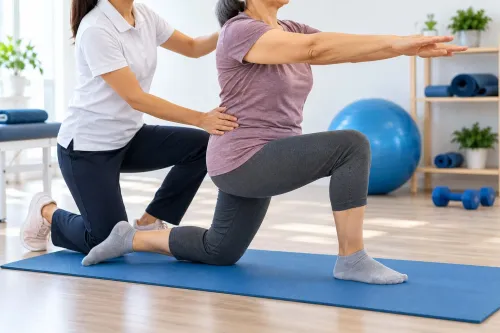
Strength Training Has a Functional Purpose
Strengthening is not limited to gym-based exercise.
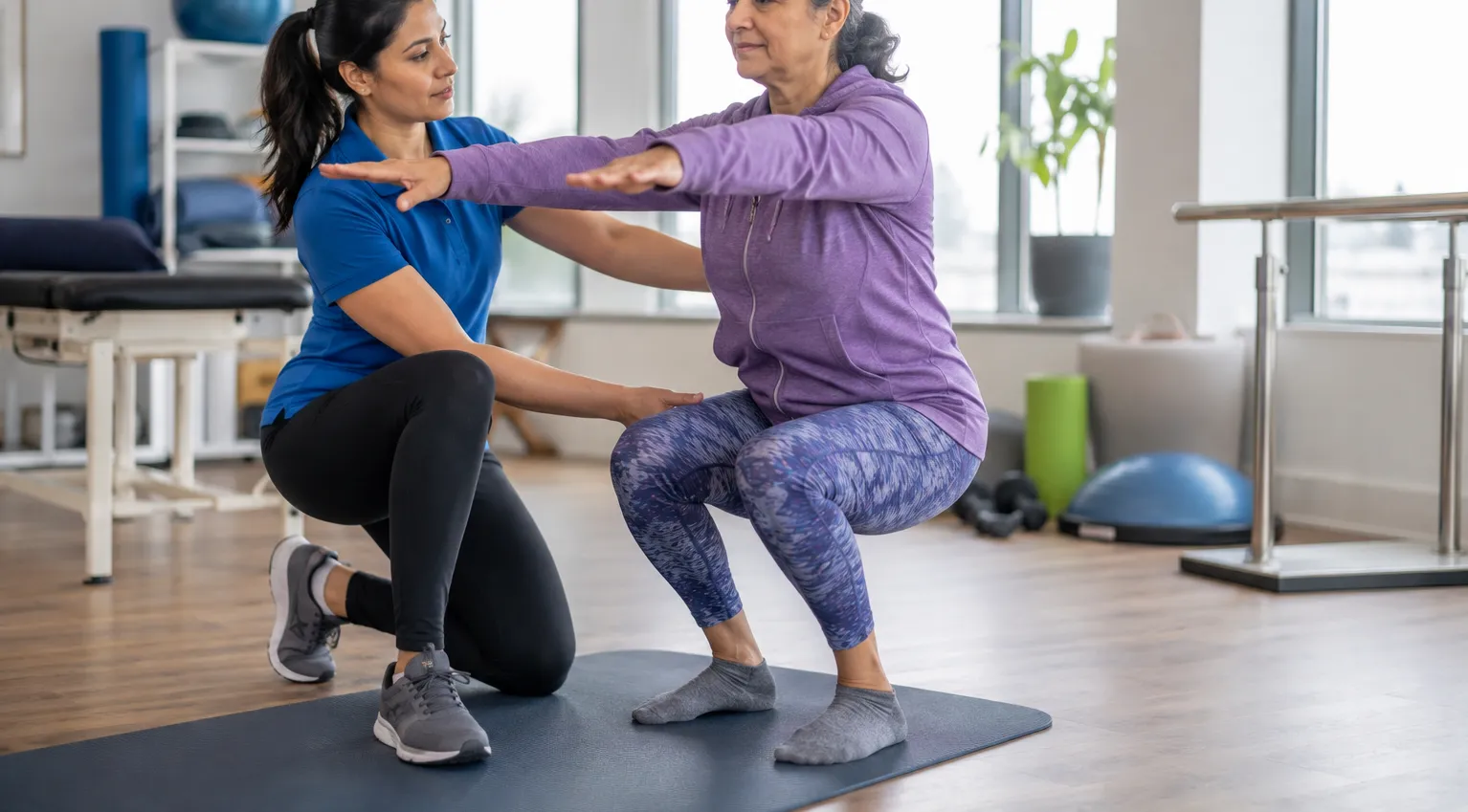
The muscles of the legs, hips, trunk, back, and upper body support everyday tasks such as carrying groceries, climbing stairs, getting out of a chair, and maintaining balance.
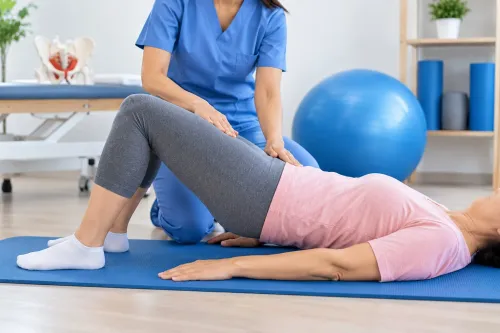
A progressive programme may begin with simple movements before resistance is gradually increased.
The appropriate level depends on the individual's current strength and health status.
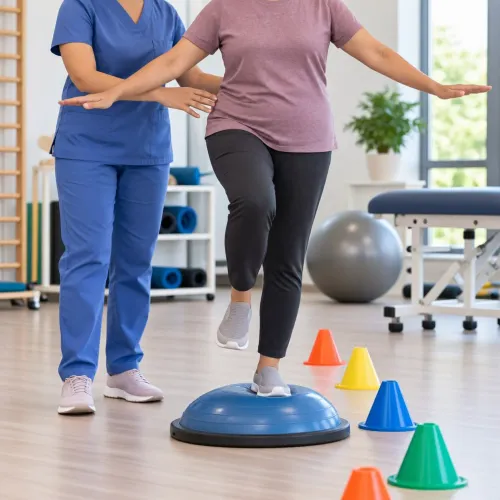
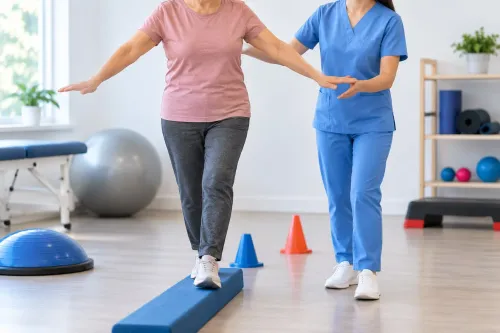
Balance Should Not Be Overlooked
Reduced balance can increase concern about falling, particularly among women who have become less active.
Balance training can be incorporated alongside strengthening and mobility exercises. The exercises should be selected according to the person's stability and fall risk.
Someone who feels unsteady during normal walking requires a different programme from an active woman looking to maintain physical fitness.
Pelvic Floor Changes Can Also Occur
Bladder-control symptoms can become more noticeable for some women around and after menopause.
Urinary leakage, urgency, and pelvic floor weakness are health concerns that can be discussed rather than silently accommodated.
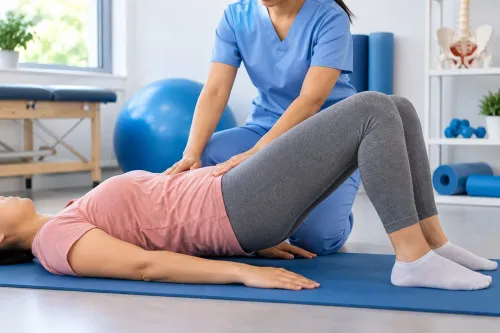
Where appropriate, pelvic floor physiotherapy may include muscle training, coordination exercises, breathing strategies, and education based on individual assessment.
Avoid the All-or-Nothing Approach
One common mistake is assuming that exercise must be intense to be useful.
A woman who has been inactive for months may need to begin with manageable activity and progress gradually. Trying to immediately return to a previous exercise level can lead to excessive soreness or aggravation of existing joint problems.
Consistency and appropriate progression are more valuable than attempting demanding routines that cannot be sustained.
Building an Individual Programme
N V Physiotherapy Clinic can assess movement, strength, balance, joint mobility, and functional limitations before developing a physiotherapy programme.
For some women, the priority may be knee or back rehabilitation. Others may require balance training, pelvic health support, or general strengthening.
Post-menopausal health is influenced by multiple factors, so exercise should be personalised rather than based solely on age. Women experiencing new movement limitations, persistent musculoskeletal pain, weakness, balance difficulties, or pelvic floor concerns can consider physiotherapy assessment as part of a broader approach to maintaining physical function during midlife and beyond.
Keywords